.svg)

News and Insights
What's New in Sustainability



Louis Armstrong was an Environmentalist
Listening to the words of Louis Armstrong, Satchmo, the famous 20th century singer and jazz trumpeter singing “What a Wonderful World” and it becomes clear. He didn’t write the words or music but his emotion floats along with the notes and you know what he is feeling. “I see skies of blue and clouds of white, the bright blessed day and the dark sacred night, and I think to myself what a wonderful world.”
The song is a hymn to the everyday beauty of the world we live in that often goes unnoticed. Listening to its words can be a calming antidote to the chaos and confusion we feel from national and global political instability and increasingly more chaotic and catastrophic events in our environment.
As environmentalists, we can help bring calm a bit of peace to our friends and neighbors by helping them put the beauty of nature into the foreground of their lives. We can do this by considering art and beauty as environmental values.
As a start, we suggest making your own home or apartment a place of beauty and thrifty, low impact living. Select some house plants or get a cutting or two from friends and start your own mini-solarium. House plants clean your air of carbon dioxide, add to the balance of humidity in your home, and bring you closer to a natural environment that we humans evolved in.
And as you evolve your home décor, consider family hand me downs or possibly second-hand items you carefully select from yard sales or vintage shopping to create your own personal cachet. In up-cycling old furniture via repair, cleaning, and polishing it, you will be hand selecting each item and the continuity of your choices will make your place both stylish and environmentally friendly.
For environmentalists, thrifty, low impact living is beautiful living. It can become a hobby and a chance to spend quality time with friends and family. Summer Sunday mornings strolling with a companion through Todd Farm Flea market in Rowley can be a complete eco-conscious pleasure. Maybe you find yourself looking for vintage kitchen ware, cloth napkins and table cloths. That fine china flower vase, maybe a bit nicked, filled with flowers, can make you or an ailing friend smile. The Japanese have a phrase for it, Wabi Sabi: Wabi - the beauty of simplicity, rustic solitude, and nature; and Sabi - the beauty that comes with age, wear, and the passage of time.
Those small imperfections in objects that give the item personality and a history. Originally it was things like the potter’s own thumb print left on purpose. But the old vase with a nick from the past, filled with wildflowers for your afternoon al fresco lunch, will bring its own unique beauty will be both of environmental value -reuse- and happiness value - a beautiful object you rescued.
It is a wonderful world and bringing more tiny moments of beauty and joy into every day actives can transform the kid’s peanut butter and jelly lunch into a fun occasion. Let beauty be imperfect, a slightly crooked vase, a weathered table, wrinkles around someone's eyes, tomatoes from the garden. Beauty isn't the same as perfection. Beauty is our glimpse of nature’s core, life’s core.
So, ACES suggests we care for our future selves and those of our families and friends. Sleep enough, be thrifty, and maintain our belongings. Let’s conserve more than we consume. Cook, arrange flowers, write, garden, photograph, draw, make things with our hands. Much of a beautiful life is simply noticing the place where we are living, the planet we call earth in a vast and largely unknown universe. The place that Louis Armstrong sang his environmentalist song about. What a Wonderful World.
We invite you to stay updated on environmental matters by subscribing to our monthly newsletter on ACES’ website. Please consider joining our community of stewards committed to Make Every Day Earth Day and subscribe to our Instagram and Facebook.
This educational column was originally published by The Daily News of Newburyport on September 5, 2026.
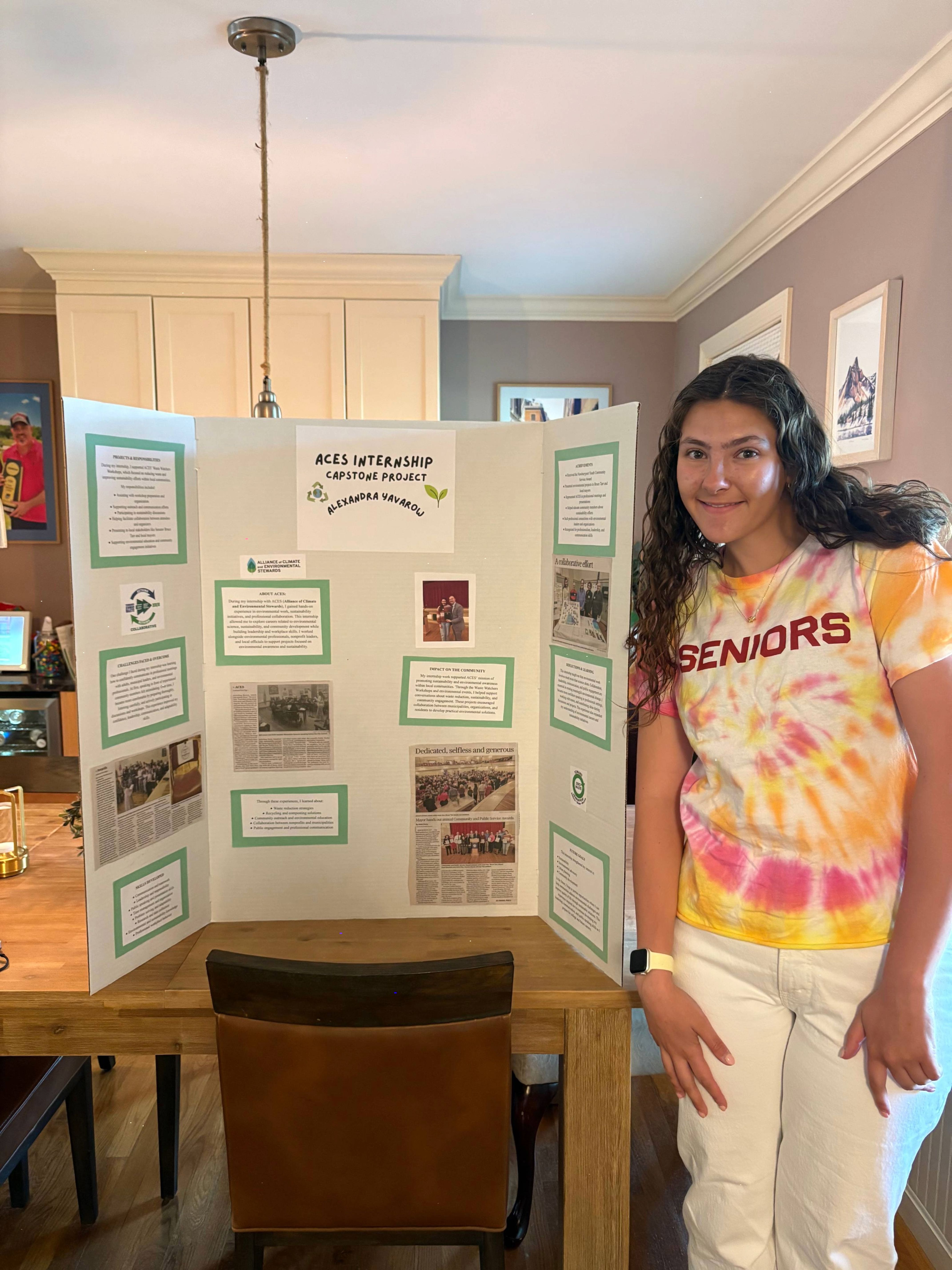
The Value of Learning from an Internship:
My recent internship with the Alliance of Climate and Environmental Stewards (ACES), gave me invaluable experience beyond the classroom. I worked with environmental professionals, nonprofit leaders, local officials, and community members on projects focused on sustainability and environmental awareness. What started as an opportunity to learn about the environment helped me grow as a person, leader, communicator, and member of my community.
One of the main projects in which I played a leadership role was the Waste Watchers Workshops for the Toward Zero Waste 2030/50 Collaborative Program. Leaders came together from eight municipalities to collaborate in addressing reducing waste and finding practical ways to make our communities more sustainable. I helped prepare workshops, support outreach efforts, participate in sustainability discussions, and connect attendees with organizers. Through this work, I learned more about waste reduction, recycling, composting, environmental education, and the challenges communities face from state mandates.
One of the most valuable aspects of my internship was the opportunity to speak with community decision makers. I presented environmental projects and ideas to local mayors, community leaders, and state legislators like Senator Bruce Tarr and Representative Dawne Shand. At first, speaking in professional settings was intimidating as I was surrounded by adults with years of experience in environmental work, government, and community development. I learned how to share my ideas with confidence while listening and learning from the people around me.
Over time, I became much more comfortable and confident. Preparing beforehand, paying attention during discussions, and pushing myself to participate helped me develop confidence. I learned that being a good leader does not always mean being the person who talks the most. Leadership really begins by asking questions, listening carefully, being prepared, and knowing when and how to contribute an idea.
I also learned that environmental work is about more than science. I had thought of environmental careers only in terms of scientific research and conservation. I now understand the how communication, public engagement, government, nonprofit organizations, and community collaboration are needed to create environmental change. A successful sustainability initiative requires people from different backgrounds to work together to find solutions.
The experience also had an impact beyond what I learned personally. Through workshops, outreach, and environmental events, I helped support conversations about sustainability and waste reduction in my community. I was especially proud to receive the 2026 Newburyport Youth Community Service Award for my efforts with ACES. Seeing my work recognized by my community made the experience even more meaningful. My involvement with ACES has also been recognized through newspaper coverage of my community service efforts, which has shown me that young people can make a real difference when they are willing to get involved.
As a result of my involvement with ACES and my commitment to its purpose, I was also selected to serve on the organization’s Board of Directors. This responsibility was especially meaningful because it showed me that my contributions were valued not only as a contributing intern, but also as a young leader within the organization. Serving on the board has given me the opportunity to continue contributing to ACES, participate in important organizational decisions, and help shape future initiatives. It is exciting to continue developing my leadership skills while having a greater role in the work I care about.
Looking back, my internship helped me discover strengths I did not always know I had. I became a better public speaker, learned how to work more effectively with a team, improved my organizational and time-management skills, and became more comfortable taking responsibility. Most importantly, I learned that meaningful change often begins with people simply being willing to participate.
As I look toward college and my future career, I will be attending the University of Wisconsin–Madison this fall to study landscape architecture, with the goal of eventually becoming an urban planner. My internship with ACES helped me realize how closely sustainability and community development are connected. I hope to use what I learn in college to help design communities that are not only functional and welcoming, but also environmentally responsible. My ACES internship has given me a strong foundation in leadership, communication, and awareness. I look forward to carrying those lessons with me as I begin the next chapter of my education and work toward a career in urban planning.
We invite you to stay updated on environmental matters by subscribing to our monthly newsletter on ACES’ website. Please consider joining our community of stewards committed to Make Every Day Earth Day and subscribe to our Instagram and Facebook.
This educational column was originally published by The Daily News of Newburyport on August 28, 2026.
Looking at Mosquitoes Through the Lens of a Naturalist
You are lying in bed almost asleep when you hear it. That whiny, high-pitched buzz that makes every muscle in your body go rigid. Your eyes pop open and you are now wide awake. You turn on the light and spend several minutes scanning every inch of the room trying to get eyes on the tiny creature, but you cannot. You are in for a long night.
Let’s face it, unless you are bird, a fish or a frog – nobody really likes mosquitoes. As a naturalist for Mass Audubon’s Joppa Flats in Newburyport, I must coexist with these annoying little buggers on a regular basis as part of my job. Massachusetts is home to about 52 different mosquito species, from the common human-biting insects to a hardier species that resides in our salt marshes. With a little prevention planning, we can enjoy our time outdoors safely. Some of my tips and tricks that I use include wearing lightweight and lightly-colored long pants, long-sleeve shirts, socks, and hats. Dark colors stand out more and absorb heat, creating “hot spots” that mosquitoes can detect after sensing CO₂ emissions from us, making dark clothing more attractive to them. Whereas, light colors reflect heat and are less visually attractive to mosquitoes.(source: entomologist.net+2) I also avoid going outside at dusk and dawn especially in the marshes or forest during peak mosquito months. Prevention is not a gimmick or a hack. It takes time and patience to find what works best for you. It comes down to personal choice and comfort; from insect repellent (DEET or no DEET) to elimination methods (bug zapper or fly swatter). I personally have not found any changes for the better if I avoid bananas, avocado or other high-potassium foods or if I gorge on garlic or consume onions before I venture outdoors. It is best to consult your local Board of Health as they will have information about the degree of concern in your city or town and also provide information about the best methods to minimize the risk of infection.
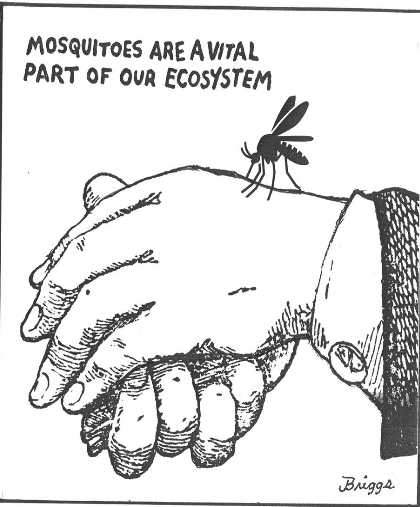
Despite being known as pests, mosquitoes play some very important roles in the natural world. They provide food for a variety of animals; they aid in pollination and nutrient recycling. With more than 3,500 species, mosquitoes are a vital part of our ecosystem. Their larvae and pupae serve as food for fish, while adults are eaten by birds, bats, and frogs. Male mosquitoes primarily sustain on nectar, contributing to pollination. Despite what you may think, mosquitoes help stabilize water quality by breaking down organic matter such as decaying vegetation. The ecological importance of mosquitoes goes beyond being mere nuisances, calling to mind their necessary function in food webs and ecosystem health. Thus, it is vital to recognize the many contributions of mosquitoes while staying mindful of the threats they can cause and the negative effects they have on human health. It all comes down to preparation and maintenance. (Source: Why Are Mosquitoes Important To The Environment)
So what makes them pester you repeatedly? Mosquitoes are attracted to the carbon dioxide we exhale when we breathe out. So, you can either learn to hold your breath for a long time, or you can try some simple and effective methods of control. This can start with something as simple as chemical-free mosquito management.
Here are some examples that you may want to try. Try them in your own garden and track the changes for the better!
1. Remove Standing Water. Female mosquitoes seek out stagnant water to lay their eggs from puddles to watering cans. Scan your yard for anything that collects rainwater, like empty pots, buckets, or clogged gutters, and empty them regularly. For bird lovers, consider a bird bath fountain or water agitator to make it less inviting to mosquitoes.
2. Trim Long Grasses. Tall grass provides shelter, shade and a wind-free zone for mosquitoes. Keep your grasses trimmed around garden beds or high-use areas of your yard.
3. Use the Wind! Flying in the wind is a challenge for a tiny insect and a stiff breeze helps to diffuse the carbon dioxide and body heat that attract mosquitoes to you. Try setting up a porch fan with enough airflow to keep them away.
4. Scented Plants. These plants contain natural oils (like citronella) are worth a try. These varieties have natural repellent properties and if you crush or rub the leaves between your fingers, the oils that are released will help keep the mosquitoes from your yard. Remember to trim these plants regularly.
- Lemon Balm
- Eucalyptus
- Marigold
- Garlic
- Lemon Verbena
- Basil
- Sage
- Scented Geranium
- Nasturtium
- Catmint nepeta
- Lemongrass
- Rosemary
- Fennel
Givin these simple, low-maintenance techniques a try not only will give you a more pleasant time outdoors but by avoiding chemical pesticides you are playing an important role in creating a safe, healthy habitat for both people and wildlife. (source: How to Create a Mosquito Repelling Garden)
We invite you to stay updated on environmental matters by subscribing to our monthly newsletter on ACES’ website. Please consider joining our community of stewards committed to Make Every Day Earth Day and subscribe to our Instagram and Facebook.
This educational column was originally published by The Daily News of Newburyport on August 21, 2026.
The Six-Week Life of a Summer Bee
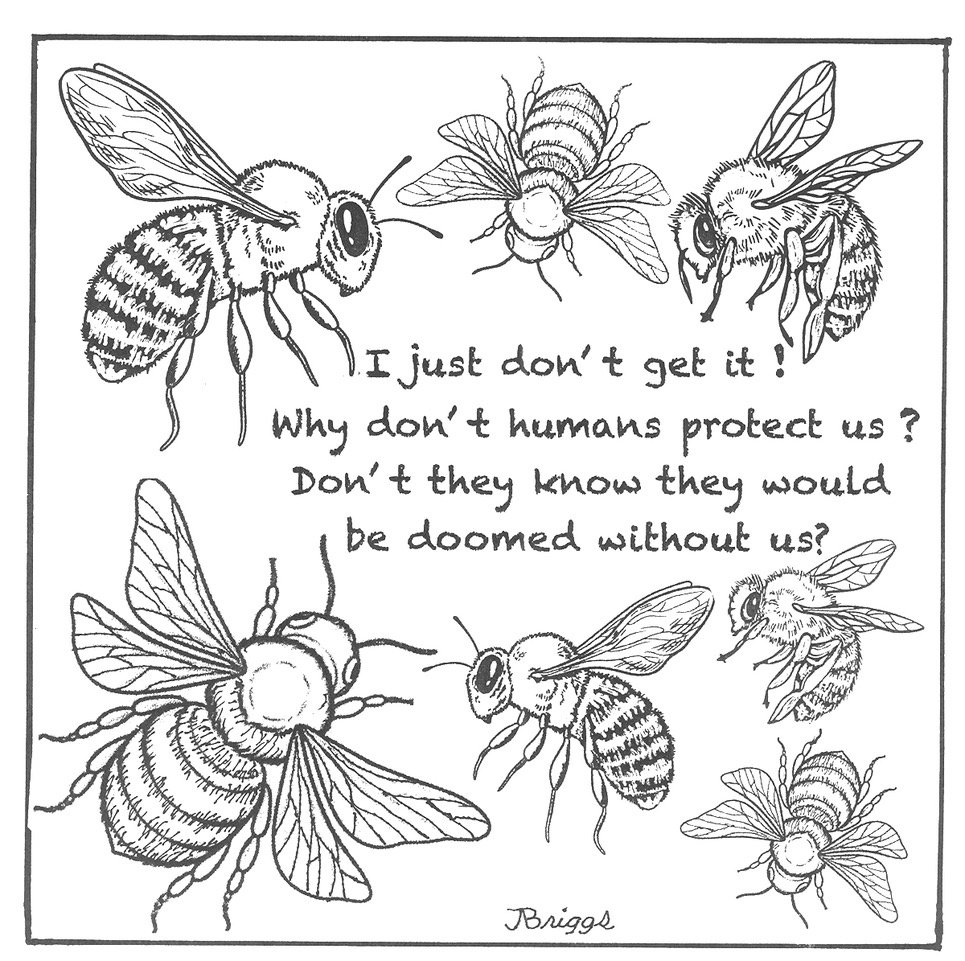
In honor of National Honey Bee Day, August 15, we are sharing these insights on our busy bees. A summer honeybee works herself to death in about six weeks, flying flower to flower so we can eat. Winter bees live months longer just to keep the hive alive until spring. And bees rarely sting unless provoked, so there's no reason to fear them, kill them, or spray them with pesticides. Here's why that all matters.
A summer worker bee's entire adult life is a sprint. She leaves the hive on foraging runs, visiting dozens of flowers per trip, gathering nectar and pollen to carry back to the colony. She does this for weeks on end until her body gives out. Most summer bees don't survive past six weeks.
It takes a staggering amount of that labor to make even a little honey. A single bee produces only a fraction of a teaspoon of honey in her whole lifetime. The bees in a hive have to visit millions of flowers in a season just to fill its winter stores. The honey itself comes from teamwork: bees deposit nectar into the honeycomb, then fan it with their wings to evaporate the excess water. What's left is the thick, sugar-rich syrup we call honey, summer's abundance stored for a season with no flowers at all.
Bees born late in the season aren't built for that same sprint. Winter bees live months longer than their summer sisters, long enough to carry the colony through to spring. They cluster together in the hive and vibrate their flight muscles to generate heat, keeping the queen and each other alive until the flowers return. One generation burns out gathering and preserving food. The next exists mainly to protect that food, and the colony, until winter breaks.
As bees move bloom to bloom, they carry pollen with them, and that pollination lets plants reproduce. A wide range of crops depend on it: almonds, apples, cucumbers, melons, pears, avocados, and more. Set the honey aside entirely, and bees are still doing quiet, unpaid work that much of our food supply depends on. Habitat loss, pesticide exposure, disease, and a changing climate have all pressured bee populations in recent years. Because so much of our food system leans on their pollination, a decline in bees isn't just an environmental footnote. It's a threat to the produce aisle.
A bee landing near you at a picnic or drifting past on the porch is not looking for a fight. Stinging is a last resort for a honeybee, not a first move, since she dies after she stings. She has every reason to avoid you, not seek you out. Bees typically only sting when cornered, swatted at, or defending their hive. That makes reaching for pesticides, or squashing a bee out of reflex, a bad trade. If a hive turns up somewhere inconvenient, in a wall, a shed, an old tree, the better call is usually a local beekeeper rather than an exterminator. Many beekeeping associations will relocate a colony rather than destroy it.
There's plenty to do close to home. Plant something bee-friendly and go native if you can. Native plants suit local soil and rainfall, so they need less fuss, and local bees are evolved to use them. The Pollinator Toolkit at pollinatorpowerworks.org/pollinator-toolkit filters native plants by bloom time, sun, and moisture. Not every garden center carries true natives, so check here for a starting list. Locally, The Monarch Gardener and Wolf Hill Nursery, both in Ipswich, Massachusetts, are solid places to start. Skip the chemicals on your lawn and garden, leave out a shallow dish of water with a few pebbles so bees can drink without drowning, and buy local honey when you can. It supports beekeepers directly and keeps small, well-managed hives in business.
This Honey Bee Day, the honey in your kitchen is worth a second look. It isn't just a sweetener. It's the result of an entire summer's worth of short lives, spent in service of the hive, and in service of us too.
Dianne Richards is President of the Seacoast Beekeepers Association of New Hampshire. Susan MacPhee is with Pollinator PowerWorks.
We invite you to stay updated on environmental matters by subscribing to our monthly newsletter on ACES’ website. Please consider joining our community of stewards committed to Make Every Day Earth Day and subscribe to our Instagram and Facebook.
This educational Column was originally published by The Daily News of Newburyport on August 14, 2026.
.jpeg)
Preserving Our Past, Protecting Our Future
When I share that I am the Director of Sustainability for Historic New England, people often respond with surprise. Not about the work I do, I’ve worked in the field of sustainability and climate action for a number of years, but that I am doing this work at a historic preservation organization.
Climate action may not be the first thing that springs to mind when thinking of historic preservation, but there are some very pragmatic reasons why Historic New England decided to create a role that focuses on sustainability and climate action. With 42 properties spread across five New England states, our sites are being directly impacted by events like stronger storms, rising seas, prolonged drought, and flooding. If we want our sites to be here and available in the future, we need to find ways to make them more resilient to these impacts.
Climate action isn’t just about resilience; it is also about reducing our contribution to the problem. Historic New England creates carbon emissions at our sites through the burning of fossil fuels for heat and hot water, our landscaping equipment, and fleet vehicles. Much of the electricity we use is also generated with fossil fuels. We have been tracking our energy use and emissions across the organization since 2023 and have made a commitment to reducing our emissions 25% by 2030 with a long-term goal of reaching net zero by 2050. Reducing or eliminating the burning of fossil fuels at our sites also has the immediate benefit of improving the air quality of the local community.
Our sites can also serve as opportunities for education. We care for a variety of landscapes including fields, forests, gardens, lawns, and shorelines that have all changed over time. Sharing the story of the landscape and how we are managing the impacts we are experiencing helps people to better understand that climate change is not something abstract and far away, it is happening right now in our own backyards.
Learning that local organizations are taking action can also inspire people to consider what actions they might be able to take in their own communities. Climate change is a global problem that will have an impact on everyone, including historic preservation organizations. It can often feel like an issue that is too big to take on but it can be a little easier to take action when we understand that we are not taking on this work alone. Every person and every organization has a role to play and something they can do to create more resilient and sustainable communities and build a better future.
Joie Grandbois is the Director of Sustainability for Historic New England where she helps people in their communities learn to talk to each other and take collaborative actions on climate change. Learn more here.
We invite you to stay updated on environmental matters by subscribing to our monthly newsletter on ACES’ website. Please consider joining our community of stewards committed to Make Every Day Earth Day and subscribe to our Instagram and Facebook.
This educational column was originally published by The Daily News of Newburport on August 7 , 2026
Contributing to Conserving Nature
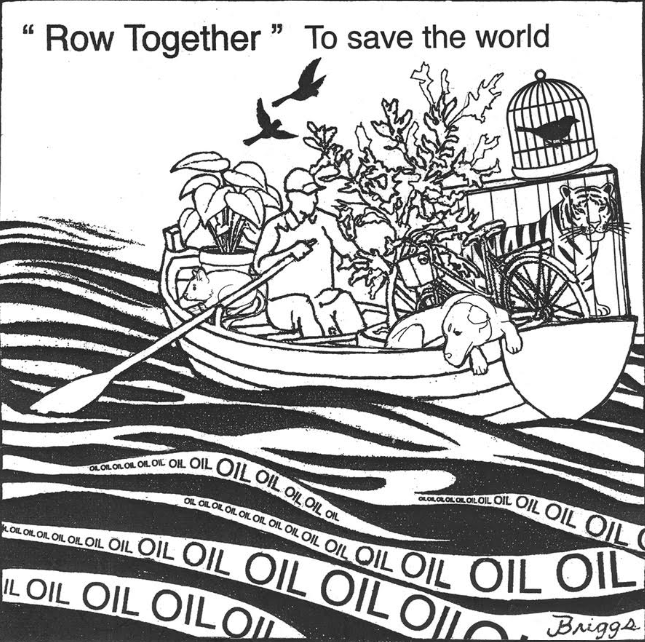
How can one person make an environmental difference? That’s simple, collaboration … with all of us rowing in the same direction!! Given today's situation, with America's centralized power structure in DC seeming to favor extractive industries and fossil fuel interests over preserving our environment, maybe we environmentalists need to reframe our approach. Remembering the celebration of World Nature Conservation Day earlier this week, the ACES team wants to focus today’s column exploring what we can each do personally to contribute to the sustainability of our environment.
The Noah’s Ark story is about saving the earth’s creatures from a disastrous mega flood. Noah acted despite overwhelming odds building an ark that preserved pairs of earth’s animals and thereby ensured the continuation of life. Thinking about how one person can make their own personal ark, the metaphor of a dory or rowboat comes to mind. Noah's Ark represents a large-scale effort to rescue and conserve nature’s creatures; a simple dory or rowboat symbolizes the power of each individual whose daily actions can help protect the environment as a whole.
ACES believes that small collaborative efforts move the sustainability boat forward, just as small environmental actions contribute to step-wise positive environmental advances. We can help sustain nature by installing a rain barrel to reduce the impacts of our garden watering. We can plant a pollinator garden to help sustain pollinating insects and birds, even if it’s just a few native wildflowers on the margins of our yards. Our individual actions like composting and recycling means fewer landfills and greenhouse gases. We can conserve electricity, install solar panels, or buy green energy. Planting trees or native vegetation can help clean the air and better host natural wildlife systems. We can all be using reusable bags and water bottles more often. Walking, biking, or using public transportation is a good idea too. And why not take a MEVA bus between Amesbury and Newburyport for a small group outing someday with your kids or a few friends.
In Noah’s story, the Ark would require years of effort to build but would eventually save life on earth; likewise, one person‘s rowboat and everyday actions, applied over time can help save our environment for future generations. Both actions reflect hope and taking responsibility. Both require determination and faith in the future. So where does collaboration come in?
Small local actions can inspire others. Communities are formed by individuals with shared goals. Many “rowboats” working together can have an impact comparable to an Ark. We believe that environmental change begins with taking personal responsibility and individual advocacy. And we believe that many individuals rowing their boats in the same direction can make a big difference. Remember, collaboration is how difficult things get done.
One last example of the power of collaboration from history, there was no Noah’s Ark during those 10 days at Dunkirk when almost 340,000 WW2 British, French, and Belgian troops were stranded on the coast of France and about to be imprisoned or killed by German soldiers. But, In June of 1940, a massive evacuation of the British and Allied troops did occur anyway. They were ferried out at great peril by over 800 naval and requisitioned vessels, and hundreds of small, private boats (The Little Ships), that sailed from England to Dunkirk to assist in the evacuation.
A lot of little rowboats can and will save our environment when they all head in the same direction with the same goals. ACES hopes that, as a maritime region and birthplace of the US Coast Guard, the metaphor of environmental rescue by individual coordinated rowboat-efforts may help capture your attention and motivate your actions. Please come “row together” with ACES and visit our website (below). Like Noah’s Ark, every person’s efforts contribute to protecting the planet. It is inspiring to think that just as Noah answered a great challenge, each of you can “row” toward a healthier future through everyday environmental choices. We can conserve nature in our back yards and all the yards together will form linked eco-systems that save life on earth ... just like Noah did.
We invite you to stay updated on environmental matters by subscribing to our monthly newsletter on ACES’ website. Please consider joining our community of stewards committed to Make Every Day Earth Day and subscribe to our Instagram and Facebook.
This educational column was originally published by The Daily News of Newburyport on July 31, 2026.

The Smile Gives It Away
There's a particular moment reviewing a photograph that I trust more than any other. I'm at my desk, going through a series of images from travel or a walk, clicking through frame after frame with a critical eye. Then — one stops me. Without deciding to, I smile. Something in that photo reaches me before I have a chance to consciously think about it. That involuntary smile is how I know that it’s something worth keeping.
Some writers are compelled to write. I'm compelled to create images. Nature inspires me most with its endless variety and beauty. Stepping outside, I always discover something new. My camera acts as both companion and observer. Photographs must be more than just documenting observations: they are a way of seeing the world. In my case, photos are a way of seeing nature. Experience has taught me how photographs may spark feelings and not just record an object, scene, or place.
Intuition guides my image making, built from a lifetime of taking and studying photos. Composition matters most. Camera settings are tools, and composition conveys emotion and feeling. Intuition leads me to discover unexpected details in the natural world: delicate flower petals; concentric circles of raindrops on water; shadows and patterns of overlapping leaves in the fall; and abstract patterns in ice. Most people don’t notice these details: I am drawn to them.
With the proliferation of camera phones, many images exist solely as digital files — impermanent bits and bytes. Prints are different: they’re tangible objects, something physical to view. I make my own prints with minimal edits, working in a digital darkroom not unlike the film darkrooms of earlier eras. I carefully choose paper, study the printed result, and decide whether that image earns its place on a wall. Only then does a photograph feel finished to me and ready to share.
I was chosen as the featured artist for June and July 2026 at the Parker River National Wildlife Refuge, a series administered by Friends of Parker River. For this exhibition, I chose the theme of Four Seasons, enabling me to showcase many favorite photos. Rather than organizing the images into four chronological groups by season, I arranged them to reflect the recurring cycles of Spring, Summer, Fall, Winter, and Spring returning.
I felt success when a visitor told me the exhibit made her feel joyful. All thirty images are a celebration of nature, so joy was a perfect response. Many visitors shared similar feedback. They also appreciated vibrant colors, near and far landscapes, and abstract compositions. Their reactions made me think more about what these printed, framed images mean to me.
I have some images I consider perfect: the composition pleases me; colors are harmonious; and focus with depth of field highlights subjects. All these elements come together in a way that satisfies me. I could live with the images for a long time: they make me happy, pleased, and satisfied. As a bonus, these images take me back to the moment they were captured, letting me feel that beauty again.
My photography has at least two purposes. The first is that I believe beautiful nature photos may compel viewers to care about the natural world and pay closer attention to its secrets and surprises. Caring is often a first step toward protecting our environment. The second is that I deeply love what I’ve seen. I want to share that love and appreciation with whoever remains still long enough to pay attention, and sometimes, smile. The next time you’re outside, look closely. Nature may just give you a reason to smile too.
Michael David Watkins is a Fine Art Photographer focusing on Landscapes, Nature, and Conservation. He lives in New England. View his images at www.michaeldavidwatkins.photo
We invite you to stay updated on environmental matters by subscribing to our monthly newsletter on ACES’ website. Please consider joining our community of stewards committed to Make Every Day Earth Day and subscribe to our Instagram and Facebook.
This educational column was originally published by The daily News of Newburyport on July 24, 2026.
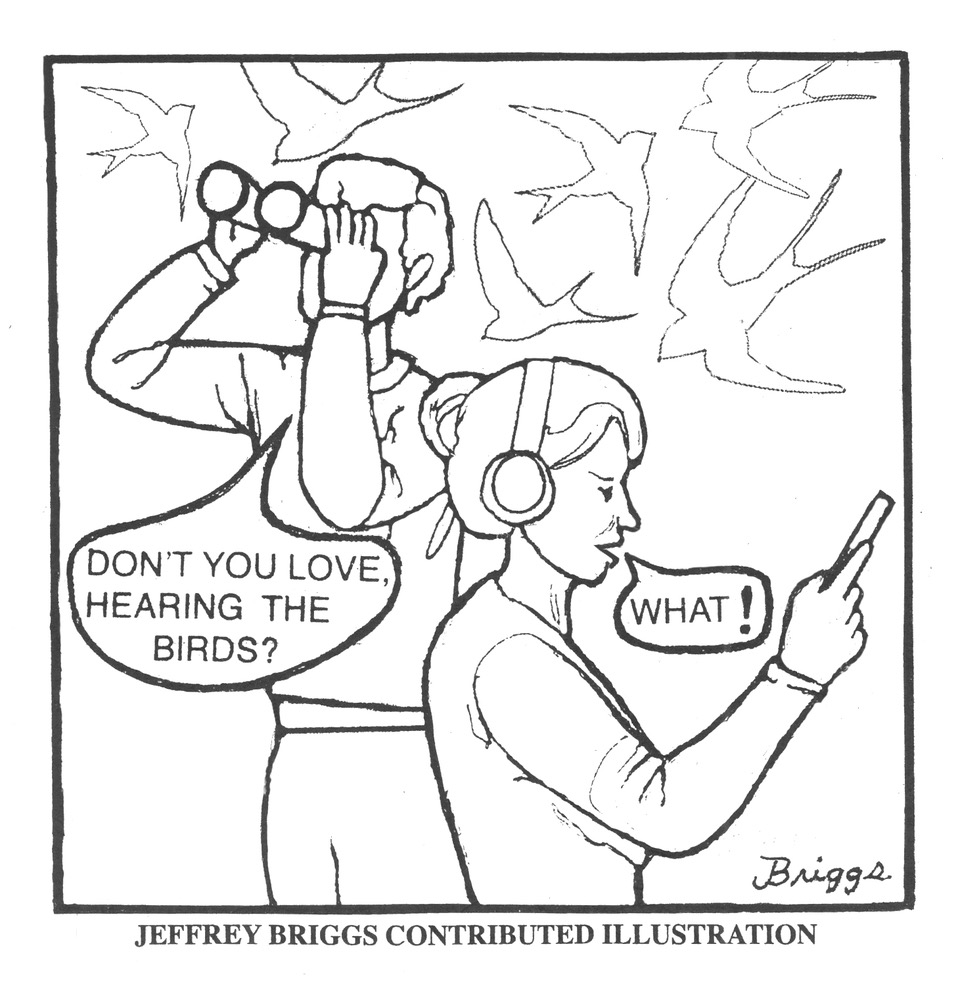
Nature’s Sound of Music
All the sounds of Nature are like music. In his opening song of the 1931 musical Oklahoma!, “Oh what a beautiful morning,” lyricist Oscar Hammerstein II opened with a vivid sensory image of prairie winds rustling through the willow trees. Allowing more natural sounds into our lives can provide a fresh appreciation for nature and additional motivation for environmental and ecosystem preservation.
Whether it’s the sound of birds at dawn through our kitchen window as we enjoy our morning coffee, or water lapping the shore or crashing high against the rocks of a jetty, we can pay attention and savor it. These sounds of nature are certainly more soothing to us than the rattle of equipment bouncing across potholes in pickup trucks.
The sounds of Nature are not just beautiful—they are essential to human well-being, cultural identity, and ecological awareness, and they deserve our attention and protection. According to the wired-for-wonder substack, nature’s sounds can help us reduce some of the stress in our lives.
Think of the beauty and variety of natural soundscapes like the wind rustlings leaves, a crow’s caw on edge of the woods, or ducks splashing on the pond. Or more subtly, the gentle slow jazz improvisation of bees humming and mourning doves cooing as two chittering squirrels chase each other though the branches.
These sounds create a sense of place and belonging and connect us to positive emotional responses. They make us calmer. Being outdoors and listening to nature’s sounds reduces stress, anxiety, and mental fatigue. Some scientific studies show they can improve focus and sleep and have a calming effect on heart rate and brain activity. Nature has inspired music, poetry, and storytelling across cultures and ages. And it can revive and re-energize us in these times of modern stress.
A friend of ACES, Cherry, told us, “I actually love the sound of honking geese. I always run to the window to see them.” and Steve from West Newbury sent along an iPhone recording of bull frog sounds over a remote pond. He included a suggestion the we, “Play it with the sound all the way up.”
As in the great American musical Oklahoma!, enjoying a beautiful morning, not just with our eyes but with our ears can give us joy. Sound fosters awareness of the ecosystems surrounding us. The diversity of sounds even gives us a chance to delve deeper into the sense of biodiversity around us as we wonder, “How many different kinds of nature’s sounds do I recognize?”
Noise pollution is a big problem in today’s world whether it is the incessant noises of autos and trucks passing by or the bing-binging of on-line gambling adds. We can improve our health and our sense of wellbeing by listening to more of nature’s sounds.
Here are some of ACES’ tips to reduce your exposure to this pollution? Advocate for fewer pot holes to lessen road noise in your neighborhood. Maybe plant a hedge to baffle road sounds while attracting birds and bird sounds. Or plant a native garden of flowering bushes and plants to draw in more birds and bees to soothe your ears. Even going to hear the voices of human little ones and their families on Sunday morning at the Tannery can help.
Let’s close with a different voice, that of Barbara Streisand whose song "Natural Sounds" and let’s raise our awareness of natural sounds - “The happy sound of water on stone, the quiet sound of waves on sand.”
ACES suggests that we try to raise our daily quanta of nature sounds. Maybe don’t listen to the late-night news on TV. It will disturb your sleep. But rather tune into some nature sounds like: https://wildsoundscapes.com/. Try walking in the Plum Island Refuge which is an especially gratifying spot to enjoy nature’s sounds. Or a walk in a park or on a rail trail and simply rally listening to what our ears hearing ….. Nature’s Sound of Music.
ACES invites you to stay updated on environmental matters by subscribing to our monthly newsletter on our website. Please consider joining our community of stewards committed to Make Every Day Earth Day and subscribe to our Instagram and Facebook pages.
This educational column was originally published by The daily News of Newburyport on July 17, 2026.
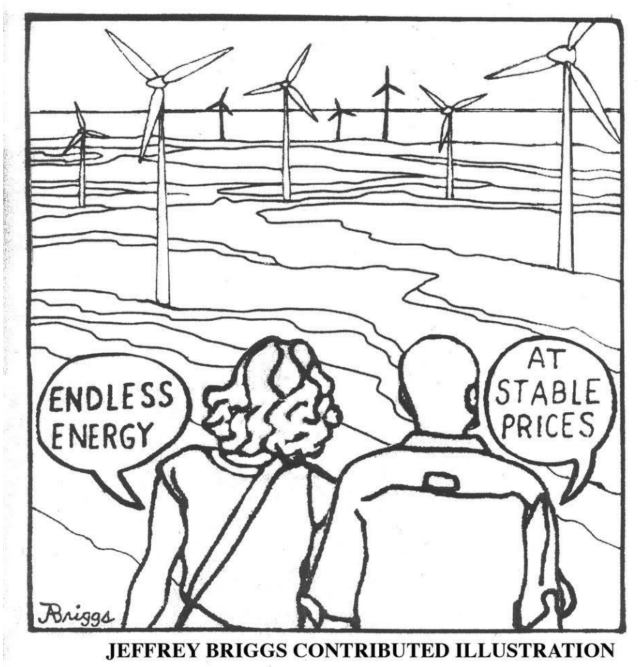
Global Energy Independence Day
On this important clean energy day, let’s recognize offshore wind energy’s role in affordable energy and protecting our unique wildlife and ecosystems. As the rising fuel prices in Massachusetts drag our electric bills up, the need for responsibly developed offshore wind energy on American coasts could not be more clear. Offshore wind energy will help stabilize our electricity bills and address the threat climate change poses to us all.
Globally, the price of electricity produced from liquid natural gas and other fossil fuels fluctuates greatly depending on global geopolitical conditions. Most recently, the United States’ war in Iran drove energy prices up as oil shipments through the Strait of Hormuz were restricted and oil became more scarce.
In contrast, local, renewable energy like offshore wind can help buffer ratepayers from the volatility of the fossil fuel market. Offshore wind energy is one of the most affordable energy sources, in part because states typically contract offshore wind energy from the developer at a fixed long-term price.
Massachusetts’ recent 20-year contract to receive energy from offshore wind project Vineyard Wind 1 is on track to save Massachusetts ratepayers $1.4 billion on their electricity bills over the next two decades.
Vineyard Wind 1 completed construction 15 miles south of Martha’s Vineyard earlier this year despite legal roadblocks from the Trump Administration that have since been dismissed. The project’s 62 turbines will generate 800 megawatts (MW) of clean energy for the state, enough electricity to power 400,000 homes and businesses.
Vineyard Wind 1 is a project of firsts. It is the United States’ first utility-scale offshore wind project, Massachusetts’ first offshore wind project, and the first of two Vineyard Offshore projects planned in the state. Vineyard Wind 2 —which has an approved Construction and
Operations plan from the federal government but still needs to go through permitting processes—would deliver up to 1,200 MW of energy, or the equivalent of powering 650,000 homes, to the New England grid.
Offshore wind projects in the United States have to undergo a thorough planning and permitting processes with protections for communities and wildlife at every step of the way.
Vineyard Wind 1, for example, prioritized avoiding critical ocean areas used by species such as the North Atlantic right whale, an endangered whale species that spends time off the coast of Massachusetts, and used a variety of technologies and strategies to avoid or minimize impacts on whales and other wildlife during construction.
Energy prices are not the only thing on the rise. Climate change is making extreme weather events more intense and more frequent.
Growing up in a historic coastal New England town not unlike Newburyport, I have seen how climate change is affecting our region. Hotter summers, more extreme winter storms, shifting species habitats, and contingency plans for when historic streets and coastlines are underwater mar our otherwise picturesque towns.
Newburyport’s 2020 Climate Resiliency Plan identifies how climate change-induced threats such sea-level rise, winter storms, and flooding will impact the city. Offshore wind energy on the grid will help Newburyport meet its clean energy goals and can improve air quality in the region while offsetting some of the worst impacts of climate change.
On Global Energy Independence Day (July 10), let’s not forget that offshore wind is the cleanest and cheapest way to develop a home-grown energy supply.
Lily Sones is the Storytelling Coordinator for the National Wildlife Federation’s Offshore Wind Energy Program.
ACES invites you to stay updated on environmental matters by subscribing to our monthly newsletter on our website. Please consider joining our community of stewards committed to Make Every Day Earth Day and subscribe to our Instagram and Facebook pages.
This educational column was originally published by the Daily News of Newburyport on July 10, 2026.
.jpg)
Reducing waste
WEST NEWBURY — Local people who are passionate about waste reduction gathered for a picnic full of food and conversations with like-minded individuals on Saturday at Maple Crest Farm.
The event was a collaboration between Newburyport-based nonprofit the Alliance of Climate and Environmental Stewards, or ACES, as well as Waste Ambassadors and the Wise Waste Warriors, two citizen action groups in the city.
Each group has focused on reducing waste in Newburyport, according to Waste Ambassadors co-leader Ben Iacono.
“All three organizations have been involved for a number of years in reducing waste and helping the city to achieve zero waste goals that the state of Massachusetts has mandated for both 2030 and 2050,” he said.
Iacono said the intent of hte event was to allow members of these groups to come together in a social setting.
“The idea germinated as a way to celebrate or bring together all of the parties that are working on this reduced waste effort. It was more or less a social event to celebrate everybody’s involvement, activities and also an information distributing type of picnic in a more social setting,” he said.
Once the groups decided to host a picnic, finding a venue was easy as John Elwell, an ACES executive board member, owns Maple Crest Farm.
With a venue and concept established, the three groups extended invitations to all of their members, as well as some new people who expressed interest in joining the groups.
So approximately 40 people attended the picnic Saturday to soak up the sun, enjoy delicious food and chat with people from different groups. The picnic also served as a chance for people to express their opinions on the environment and sign up for new groups if they were interested, Elwell said.
“We had a place where they could sign up, we had little places where they could note that they wanted to know more about composting, or they wanted to know more about growing plants that help the environment,” he said. “So we had things for them to think about, talk about with people they’re with, and then give their name or give their advice as to what needs to be addressed.”
Iacono said while this is the first time the three groups have collaborated for a picnic because their members have long been working toward the same goal, people were able to converse with those who shared their passions. He said this made for an enjoyable experience for all involved.
“That was the highlight of it,” he said of seeing members of different groups interact. “Because everybody recognized everybody’s contribution to the whole effort. And, it was really reinforcing the fact that it’s a very important mission that we’re on collectively to help to reduce waste.”
This was originally published by The Daily News of Newburyport on July 3, 2026.

Using all the best composting practices
As the saying goes, one size doesn’t fit all, and it rings true with about everything we do. We all have different viewpoints on preferences of books or jobs or types of houses and composting food waste. Having many options allows us to find the best fit for whatever we are doing.
Newburyport has been a good example for investigating many options to increase the amount of food waste that stays out of the waste stream and goes to composting. Furthermore, based on industry standards, the city has incorporated all the best practices available, not just for composting, but recycling and reuse, too.
Why is it important to prioritize composting and keep food waste out of the waste stream?
The biggest reason is cost, the city pays over $100 per ton of trash to haulers to carry it away, and the money to pay for that comes from taxes. Add to the current cost, no more available landfills in Massachusetts and incinerators working at full capacity, therefore haulers must transport further distances to get to new disposal sites. This increased distance to move waste is tied to the cost of fuel.
So, the less waste we generate, the less we have to have hauled away, which helps minimize the city’s cost and stabilize taxes. And focusing on food waste is 30% to 40% of the weight of trash, as a consequence reducing the amount of food that goes to trash is the most significant impact you can make to controlling the increasing costs of waste hauling.
The best practices Newburyport has implemented over the past eight-plus years include curbside pickup by Black Earth and individual backyard composting and municipal communal composting. Each contributes to the drive to decrease our waste stream in different ways.
Curbside pickup is a great option for families, or groups of people willing to share a compost bucket, and restaurants.
For residential pickup, the cost is about $110 per year and offers a convenient method to pull food waste out of the stream, and along with recycling can minimize weekly trash by over 50%. From an environmental perspective, it keeps the food waste from breaking down and emitting significant methane in open landfills.
Individual backyard compost works well where property owners have some space to create a compost area or use a piece of compost equipment to break down the food waste into a nutrient soil.
The only downside to the backyard method is the limit of food types that can be put into the compost mix. No animal
bones, meats or fats, including cheeses and other dairy products that are too complex to break down on a small scale.
The third option, municipal community composting, provides convenient compost drop-off stations around the city where residents can deposit their food waste for free.
Currently, there are four active sites (the senior center parking lot, wastewater treatment parking lot, recycling center on Colby Farm Lane and on the Clipper City Rail Trail at the intersection of Washington Street), plus two more that were to come online July 1 (Cherry Hill soccer field and Perkins Park). These stations are especially suitable for people who don’t generate enough food waste weekly to warrant curbside pickup.
The compost stations are serviced weekly by Black Earth and the food waste is processed the same as curbside pickup at their facility to produce a nutrient- rich composting material for farms, gardens and landscaping.
In Newburyport, composting can be easy, affordable and convenient, and as residents we should be taking advantage of the service to decrease our trash for the reasons outlined above and do our part to positively impact the environment.
We invite you to stay updated on environmental matters by subscribing to our monthly newsletter on ACES’ website https:// www.aces-alliance.org/. Please consider joining our community of stewards committed to Make Every Day Earth Day and subscribe to our Instagram https://www.instagram.com/ acesalliancenbpt/ and Facebook https://www.facebook.com/ ACESAlliance/pages.
This educational column was originally published by The Daily News of Newburyport on July 3, 2026.
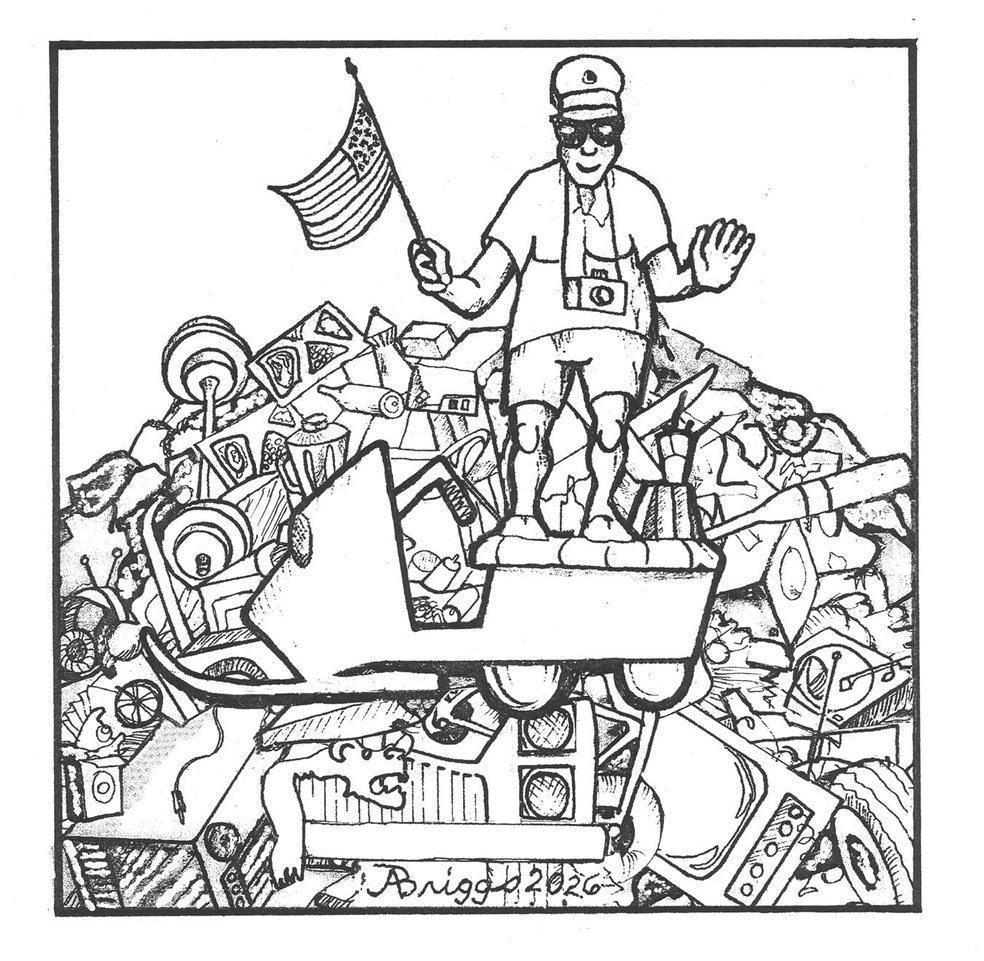
Cradle to Cradle
Cradle to Cradle is the design and production of all types of products such that at the end of their life, they can be recycled (up cycled). This imitates nature where everything is either recycled or returned to the earth, directly or indirectly, in a completely safe and nontoxic manner. CRADLE TO CRADLE: Remaking the Way We Make Things is a 2002 book by German chemist Michael Braungart and US architect William McDonough. It is a manifesto detailing how to achieve their Cradle to Cradle model, by which products can be designed from the outset so that after their useful lives, they will produce nourishment for something new. “Biological nutrients” will easily re-enter the water and soil without depositing synthetic materials and toxins. “Technical nutrients” will continually circulate as pure and valuable materials within closed loop industrial cycles, rather than being recycled – really, down cycled – into low-grade materials and uses. Drawing on their experience in redesigning everything from carpet to corporate campuses, McDonough and Braungart make an exciting and valuable case for putting eco-effectiveness into practice and show how everyone involved with making anything can begin to do so as well.
There are many reasons why we have created a throw-away ethic. Our highly technological and transient society see cheaper products as more desirable. The throw-away ethic has led to planned obsolescence. The arguments for product planned obsolescence are – the cost of manufacturing a new product is less than repair, technical improvements make the product obsolete quickly and our super industrialized society demands that we constantly produce more.
Implementation of the Cradle to Cradle manifesto in America, as of May 2026, has focused on shifting towards verified compliance as major corporations make sustainable pledges to full product recycling.
Examples of key adoption trends, as of 2026 include:
· Adoption of manufacturing recycling
· Verizon 5.0 standard: introducing more rigorous requirements for sustainability of its products
· IKEA has been re-designing its furniture to be recycled into new furniture with programs that take old furniture in and gather the little metal assembly clips to reuse and reprocess the boards and fabrics to reuse.
· Digital Materials Passports: integration with AI enables manufactures to track product constituents from production to recovery.
UKT-shirt manufacturer Teemill has developed a high tech, new way of producing T-shirts, using organic inks and queen technology creating fully cycled T-shirts
· Legislative Momentum: extended producer responsibility to take physical and financial responsibility for their products’ end of life cycles
In 2025Massachusetts bill “Mass Ready Act” includes policy changes for extended product, responsibility, and single use packaging restrictions
· Building Environmental Leadership: Cradle to Cradle standards are increasingly recognized by major green builders, architects and construction materials manufacturers. Locally, a recent NPR story stated “proponents of a growing movement in the construction industry are asking: Why tear down old buildings with wrecking balls when those materials can be mined for reusable materials?” The practice, called deconstruction, creates a circular economy of reuse for building materials. For example, Anna Perks of Boulder, CO is a specialist contractor who is moving into handle the materials left behind. Her approach is to “deconstruct” it, not “demolish” it.
Our ancestors naturally depleted water, hydrocarbons, forests, rivers, fish, with the richest land and the most accessible resources first. Now people are increasingly forced to turn to marginal land to grow more food. Instead of extracting minerals on or near the surface, deeper and much poorer deposits must be mined and refined. Water and petroleum must come from lower quality sources or deeper wells and be transported over longer distances at an increasingly greater environmental cost. Future generations will find resources becoming limited and recycling will become a big part of how we maintain our economy and maintain sustainability. The Cradle to Cradle manifesto undoubtedly will become the mandate, most likely controlled by more government regulations and interventions.
Jeffrey Briggs is a long time resident of Newburyport and an acclaimed sculptor and illustrator who can be reached atJeffrey@briggsscupture.com
We invite you to stay updated on environmental matters by subscribing to our monthly newsletter on ACES’ website. Please consider joining our community of stewards committed to Make Every Day Earth Day and subscribe to our Instagram and Facebook.
This educational column was originally published by The Daily News of Newburyport on May 29, 2026.
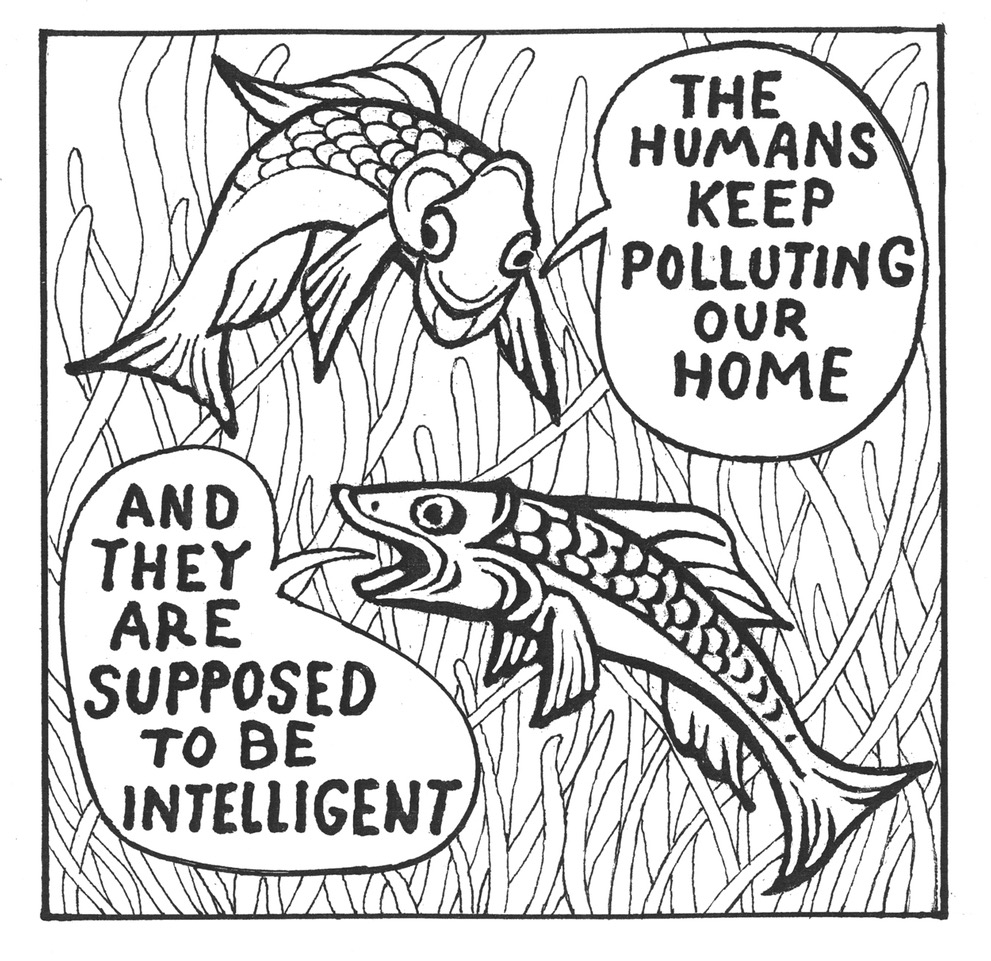
Positive Water Quality – is it Sustainable?
Feeling helpless lately? Me too. I am an oceanographer/atmospheric scientist. Earlier this week, the National Science Foundation (NSF) under the Trump administration began to dismantle and remove all in-water infrastructure for four of its five strategic Atlantic and Pacific Ocean global monitoring arrays, beginning off the coast of Oregon and Washington.
These arrays are part of the NSF funded Ocean Observatories Initiative (Ocean Initiative) that provides us with real-time monitoring data and allows us to address critical global issues such as climate change, ecosystem variability and sustainability, ocean acidification, and carbon cycling. The Ocean Initiative sensor arrays, more than 80 physical platforms and over 900 instrument packages, provide the physical framework for housing 36 different sensor types that collectively measure more than 200 different oceanic and atmospheric parameters. All collecting very valuable data.
But why would our government decommission a working system that provides us with so much important information about our planet and environment? I thought that we humans were supposed to be intelligent. I can only guess that the reason for this decision is that we can’t claim climate change and ocean degradation are happening if we don’t have any data to prove it. Naturally this decision has triggered massive pushback from international scientists and a bipartisan coalition of US lawmakers who are aggressively fighting to halt the decommissioning process. But it is already underway.
Short of writing the National Science Foundation and telling them that they are nuts for dismantling an almost $400M global environmental monitoring system that took 10 years to build and that can help us manage our changing planet, there is not much that greater Newburyport citizens like us (me) can do to remedy this situation.
But there are things that we can do locally that will have a positive impact on the sustainability of our local environments. We can become more aware of our own regional air, water, and biological environments and how we can benefit or harm them through our actions or inactions. Most of us live in a coastal watershed environment: Merrimack or the Parker River or Ipswich Watersheds. Do you keep track of what is happening in your watersheds that might impact their long-term sustainability? Are you part of the solution or part of the problem?
Here's some good news. Recently, the Larkin Mill Dam located in Newbury on the Parker River was completely dismantled and removed with the support of a broad coalition of local, state, federal, and nonprofit organizations. Taking down this barrier reopened critical spawning grounds for native migratory fish species, including river herring and sea-run brook trout, while simultaneously reducing local flooding risks. But we’re not done, there’s still the Ipswich Mills Dam, a work in progress. Now the highest-profile pending project in the immediate area and backed by a $1.2 million grant, it has cleared its state certifications and is awaiting final federal permits to open up 45 miles of upstream mainstem river.
And there’s the Talbot Mills Dam in North Billerica located on a critical tributary of the Merrimack River. The Merrimack River Watershed Council (MRWC) and various partners are aggressively pursuing its removal. Dismantling this 200-year-old structure will free up an astonishing 135 miles of high-quality upstream habitat for migratory river herring and shad.
Unfortunately, there is also a less positive water quality aspect of our rivers and watersheds, pollution, that still need to be addressed. For example, the Merrimack River is currently facing a mixture of worsening drought conditions, intermittent heavy rainstorms, and spikes in bacterial pollution (likely sewer overflow sources) identified by the MRWC in their 2025 water quality monitoring program. The Merrimack system provides drinking water to over 600,000 people and recreational activities for 200 communities and over 2.5 million people. Unless addressed, Combined Sewer Overflows (CSOs) and other non-controlled land runoff into our rivers will pose a significant threat to future regional sustainability, acting as a critical bottleneck for ecosystem health, public infrastructure, and economic growth. There is work to do. So, please be an “intelligent human” and be part of the solution … get involved locally where you can make a big difference.
Lon Hachmeister lives in Newbury by the Parker River and is an active member of ACES and various local and regional sustainability organizations. He can be reached at lon.hachmeister@aces-alliance.org
We invite you to stay updated on environmental matters by subscribing to our monthly newsletter on ACES’ website. Please consider joining our community of stewards committed to Make Every Day Earth Day and subscribe to our Instagram and Facebook pages.
This educational column was originally published by the Daily News of Newburyport on June 19, 2026
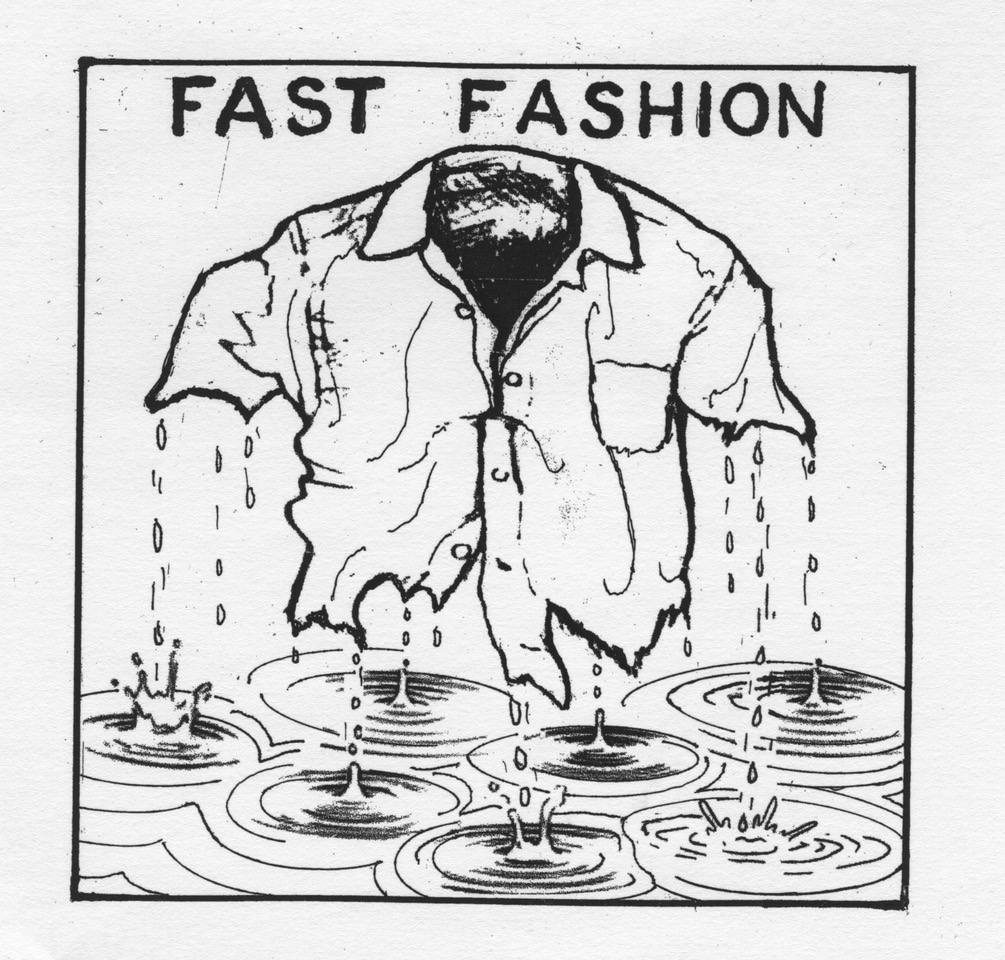
Rubbish to Runway
Fast fashion produces 92 million tons of textile waste annually. It accounts for roughly 10% of annual carbon emissions. For those who are unfamiliar with the term (and count yourself lucky if this is the case), fast fashion is the rapid design and manufacturing of clothing in order to maximize output.
Traditionally, clothing design has not been a fast process. New styles came and went, but at a pace that manufacturers could keep up with. However, the introduction of fast fashion has completely turned the cycle upside down. New styles rotate on a weekly basis, and each company fights for space in the rapidly changing industry by offering hundreds, if not thousands, of different garments for customers to pick from at any given time.
But as the old adage says, of the three measures of a product (fast, cheap, and well-made) you can only ever have two. Fast fashion chooses to capitalize on the first two and entirely neglects the third. After all, no one is going to care that their shirt–which arrived on Monday–is falling apart by Friday if there is a new package waiting on their doorstep. The most worrisome part is how well this business model works.
Each major world economy seems to have adopted its own brand to occupy the growing industry: Spain has Zara, China has Shein, Sweden has H&M, Japan has UNIQLO, Ireland has Primark. And don’t think that the U.S. is exempt from this list. Instead of producing the clothes, we buy them. The U.S. is the number-one consumer of clothing in the world by volume, with each American buying an average of 53 new items each year.
And while the production of these textiles is terrible for the environment in and of itself, ACES’ focus this week is on what happens to that shirt that is falling apart by Friday. Most traditional clothing is made with materials that are harvested from natural sources (e.g., cotton, linen, wool, leather, silk) and therefore can be returned to the earth easily when it has been thoroughly used. When clothes are made from high-quality materials, this should be quite a while.
On the other hand, to maximise efficiency and keep prices low, fast fashion uses synthetic materials (e.g., polyester, nylon, acrylic), which harm the earth in the same way that plastic does when it is put in a landfill or winds up in the ocean.
Massachusetts does not allow textiles to be thrown away, so many opt to donate what they no longer want to thrift stores. Thrifting, a growing market especially among younger generations, is a great way to mix up your wardrobe while causing minimal environmental impact. But the thrift cycle relies on goods of a high enough quality that they can transition between multiple owners and retain their use. Since Americans consume copious amounts of clothing each year–and throwing it away is illigal, despite much of it not lasting–this raises the question: where does all of this fabric end up?
There is no definitive answer, although it is assumed that much of it ends up harming the environment in one way or another. Some is shipped overseas and then dumped because it is too decrepit to be resold, and some is simply burned.
In Groveland, there appears to be a solution. Veasey Park is hosting its annual “Rubbish to Runway” fashion show at the end of the month, and expectations are high for this year's designs. On the evenings of June 26th and 27th, models will strut down the runway wearing novel outfits made from reclaimed and recycled materials. Previous outfits include ball gowns created from produce bags and tracksuits made from camping tents.
Proceeds from ticket sales go toward “offering free and affordable community events and developing innovative arts programs that cater to diverse age groups and skill levels at Veasey Memorial Park.” Additionally, this event brings community members together and raises awareness for sustainable fashion choices.
With creative community efforts like this, we have the opportunity to combat the harmful effects of fast fashion.
If you are interested in learning more about Rubbish to Runway, visit veaseypark.org. Tickets are almost sold out, so make sure to get them while you still can!
We invite you to stay updated on environmental matters by subscribing to our monthly newsletter on ACES’ website. Please consider joining our community of stewards committed to Make Every Day Earth Day and follow our Instagram and Facebook.
This educational column was originally published by The Daily News of Newburyport on June 12, 2026.
.jpeg)
A Perspective on the Value of Trails
In honor of National Trails Day on June 6, I am glad to share that several of our community trail are part of an international pedestrian and cycling pathway.
The East Coast Greenway route, which is 65% complete, runs through 15 states from Key West, Florida, to Calais, Maine, then over the St. Croix River to New Brunswick, Canada. For a few miles on this journey people travel on the Clipper City Trail in Newburyport and Marsh Trail in Salisbury. The Greenway Alliance reports that these multi-use shared pathways strengthen local culture and economies by providing outdoor recreation and sustainable transportation connecting communities to each other and with nature.
But it will take all our support to complete the missing pieces in Newbury and Georgetown. The challenge in Newbury is to construct the segment from the MBTA station in Newburyport south to Georgetown. This is complicated by traversing wetlands, coexisting with a wildlife management area and integrating with the neighborhoods in Newbury, Byfield and Georgetown. Projects this ambitious take all hands to build because government funds are more likely to be awarded to communities that have grassroots groups like the Coastal Trails Coalition (CTC) and active town committees like Newbury’s Border-to-Boston (B2B) Committee working alongside Georgetown’s Recreational Trail Committee.
The Border-to-Boston initiative was created by the nonprofit organization Essex National Heritage Area to assist 20 communities in creating the 70-mile shared-use trail from the New Hampshire state line to Boston. They provide insight into sources of funding, help with problem-solving, and assistance with whatever is needed in places which range from rural regions to busy cities. For more information, visit https://essexheritage.org/explore/border-to-boston/.
Another advantage of shared-use trails is that they can provide access to nature hikes such as Salisbury’s Marsh Trail which is on the list of The American Hiking Society’s recommended walks. AmericanHiking.org, an advocate for National Trails Day on June 6, also highlights Maudslay State Park in Newburyport, Old Town Hill in Newbury, Riverwalk in Amesbury, Ghost Trail in Salisbury, and in Ipswich, the Ipswich River Wildlife Sanctuary and Crane Beach.
Additional adventures can be found in Essex County Greenbelt Association lands in West Newbury, Newbury, and Rowley, as well as Trustees of Reservations properties elsewhere on the North Shore. Check out ecga.org and thetrustees.org for inspiration close to home, and for a national perspective visit greenway.org.
Our neighbors to the north in New Hampshire are working hard to build their routes. With the support of our residents and financial backing from our partners, MassDOT, USDOT, Merrimack Valley Planning Commission, MassTrails, and other institutions, we can bring this vision into reality. Among the ways you can help locally is volunteer to help maintain your favorite trails in Amesbury, Salisbury and Newburyport, and/or donate to local nonprofits such as the Coastal Trails Coalition which has recently provided a significant grant to Newbury that will strengthen our ability to attract government funding.
Contact CTC at coastaltrails.org to donate, volunteer, attend a CTC meeting, learn about progress on the trail network, or to download a trail map.
See you on the trails!
We invite you to stay updated on environmental matters by subscribing to our monthly newsletter on ACES’ website. Please consider joining our community of stewards committed to Make Every Day Earth Day and subscribe to our Instagram and Facebook.
This educational column as originally published by The daily News of Newburyport on June 6, 2026.

Animal Avatars and Biodiversity
As an environmentally conscious person, do you have an animal avatar? You know, an avatar, one of those unique gaming personifications whose qualities you’d like to be identified with. For those that love the nature of this area, the animals we see often serve as good virtual surrogates.
It’s an interesting game to play with your children or grandchildren. Ask them, “What animal would you like to be if you could be any animal and how would you help sustain the environment?” Encourage them to think about it next time they are walking in a park, along a beach, or even working on a puzzle on a rainy day. Tell them you’d like to be a be a beaver, playing in the waters of little streams, building your home and dams out of mud and tree branches, and raising your family. All of your work acts to conserve water and promote biodiversity, creating multiple unique habitats for other creatures to live in.
Might they want to be a squirrel? Like them, squirrels are always busy running around your yard chasing each other. But of course, they aren’t playing tag, they are busy gathering and saving up acorns for winter.
That’s ok. The environment needs industrious creatures too, whose buried acorns can someday grow into great oak trees. Those who volunteer their time to good causes and help sustain the planet. And, for those who are doing well financially, donate to valuable climate or local sustainability causes.
The wolves of Yellowstone make good avatars. They keep their ecosystem functioning by moving deer and elk around and away from stream edges. That allows vegetation to grow back along streams, which allows the water to cool which allows for more fish to survive. Also, wolves are cool looking avatars.
Maybe you’re a huge adult elephant. A strong keeper and protector of the herd. Sheltering young ones under your shade and circling protectively if hungry predators prowl by. Maybe you’re like a wild mustang horse. A fast mare or stallion leading your herd to greener pastures with earth-friendly choices of green energy and green transportation.
Some think having a parrot avatar might sound silly but they are smart, long lived, and can fly. A pretty good combination and in their native habitats they fly around to the ripest fruit trees and eat just enough before moving on to another group of trees, discreetly dropping seeds along the way, which helps regrow and expand forest habitat diversity.
But just like the natural world of your virtual avatars, where biodiversity abounds, we need diversity in our environmental steward ecosystem too. Not everyone needs to be a biological scientist or a water engineer; the world of environmental stewards is expansive, so be your own avatar and make a difference. Be a forest and land guardian; bears embody strength, resilience, connection to forests. Be flexible; coyotes are canny and adaptable, surviving well in changing environments.
Ensuring the sustainability of our global environment is a call to each of us to act and transform how we live and connect with nature. UNESCO, as the sole UN Organization with a mandate in science, is leading global efforts to protect biodiversity by linking science, nature, and culture. If you’d like to play along with this aspect of culture, try engaging with nature and its creatures, find a local group that best fits your avatar, and be part of the solution that our environment is looking for.
Thinking and writing about avatars, imaginary characters, and fun children’s games is one way for ACES to celebrate May 20 th , The International Day for Biological Diversity. The topic of biodiversity and mutuality of species and their inter-connections is so vast that it’s hard to share in one essay. So, ACES asks that you celebrate biodiversity creatively each in your own way. Be the personification of your avatar and make a difference. Volunteer a little of your time to the environment
Start by viewing Edward Hicks’ famous painting “Peaceable Kingdom” and choosing an animal avatar to accompany you throughout the year -https://www.artchive.com/artwork/peaceable-kingdom-edward- hicks-1848/
We invite you to stay updated on environmental matters by subscribing to our monthly newsletter on ACES’ website. Please consider joining our community of stewards committed to Make Every Day Earth Day and subscribe to our Instagram and Facebook pages.
This educational column was originally published by The Daily News of Newburyport on May 22, 2026.
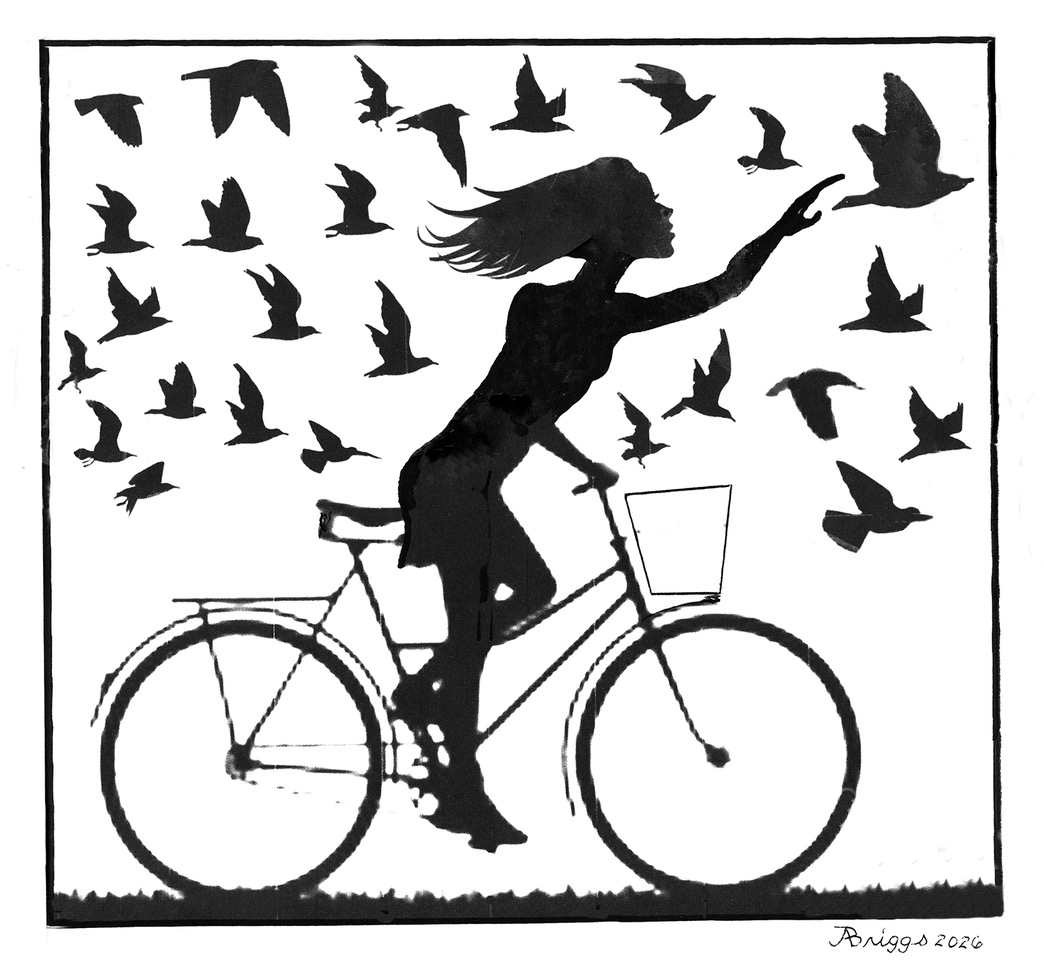
Bike to work – for yourself and the planet
May is National Bike Month, sponsored by the League of American Bicyclists, celebrating cycling as a healthy, sustainable mode of transportation and recreation. Along with other focuses during the month, this week (May 11-17) is Bike to Work Week, during which commuters are encouraged to swap cars for bikes, offering health, financial, and environmental benefits. With the warmer and longer days of spring, it’s a perfect time to think about making cycling part of your daily commute.
Greater Newburyport is ideal for traveling by bike. Our area’s gentle topography, beautiful natural environment, and historic surroundings make cycling easy and enjoyable. The Coastal Trails network provides a safe and attractive off-road spine connecting neighborhoods, downtowns, business areas, and transit nodes. Distances between key destinations are well within a comfortable cycling range for most cyclists.
Within Newburyport, low-traffic neighborhood streets combine with marked (and sometimes signalized) crossings of major roads to support safe bike riding to most local destinations. For many rides, the Clipper City Rail Trail provides a completely off-road, multi-user route connecting the downtown, several neighborhoods, the MBTA Commuter Rail station, and MEVA’s bus service. The rail trail is very well used, as documented by the “Valley Tally” trail counters deployed at six locations around the circuit.
With these resources, biking to work can be a meaningful option for many residents. For those who live and work in Newburyport, a bike commute will take less than a half hour. Those who commute by train or bus can often cycle to the transit stop more quickly than it takes to drive, park and walk to the stop.
This year, Newburyport has another option for biking to work – the Port Bikeshare system, with 25 bikes located at 5 stations along the Clipper City Rail Trail. Port Bikeshare makes it possible for those without their own bikes (or who would rather not leave their bikes out all day) to cycle from home to downtown or to the MBTA station as part of their commute. Plans are underway to add more bikes and locations later this year, making the program accessible to more residents and destinations.
The cost to use a Port Bikeshare bike is only $3 for up to 30 minutes – more than enough for any commuting ride in the city. If you use Port Bikeshare regularly, you can lower the cost of each ride by getting a $30 monthly membership that gives you unlimited 30-minute rentals for a month. That means that after only 5 round trips, every additional ride is free. Compared to the $4 cost to park a car at the MBTA station, using a bike as part of your daily commute can make financial sense.
Cycling is great for the environment. Both the Clipper City Rail Trail and the Port Bikeshare program were funded in large part by the federal Congestion Mitigation and Air Quality (CMAQ) grant program, because making it easy for people to shift their mode of transportation from cars to walking and cycling results in less air pollution. Bicycles are also quieter than cars, resulting in less noise pollution.
Finally, incorporating active transportation like walking and cycling into the daily routine is good for your health. Cycling is a highly effective, low-impact exercise that improves cardiovascular health, builds muscular strength, boosts mental well-being, and aids in weight management. It strengthens legs, reduces stress, and lowers the risk of diseases like stroke, heart attack, and type 2 diabetes. It is suitable for all fitness levels and ages.
Not everyone can switch to cycling for all or part of their daily commutes. The combination of sprawl development and an incomplete public transportation system means that many people must drive to get to where they need to be. But those who can make the switch can save money, gain personal health benefits, and help save the environment – not to mention beginning and ending the day with a joyful ride!
Rick Taintor is the president of Newburyport Livable Streets and may be contacted at rtaintor@gmail.com. To learn more about Port Bikeshare go to https://bit.ly/portbikeshare.
We invite you to stay updated on environmental matters by subscribing to our monthly newsletter on ACES' website. Please consider joining our community of stewards committed to Make Every Day Earth Day and subscribe to our Instagram and Facebook.
This Educational column was originally published by The Daily News of Newburyport on May 15, 2026.

Spring is for Hawk Watching on the Refuge
It’s a late Monday morning in April, and a group of people bundled up against the still-cold spring breeze is gathered at Lot 1 in Parker River National Wildlife Refuge (NWR). They sit or stand on the visitor center platform, binoculars trained south and southwestward above the parking lot and into the dune grassland, maritime shrubland, and salt marsh beyond.
“Where’d that kestrel go?” I hear someone call across the deck. This is the Eastern Massachusetts Hawkwatch, an organization that monitors raptor migration to support conservation as climate change, habitat loss, human development, and pesticide use threaten the birds of prey and their habitats.
Plum Island is one of the group’s three monitoring sites for spring raptor migration, where it counts an annual average of 1,100 hawks across more than a dozen species from late March to mid-May. In fact, Parker River NWR hosts the highest spring concentration of raptors–—including American kestrels, sharp-shinned hawks, merlins, turkey vultures, and northern harriers—in Massachusetts.
Following the Atlantic Flyway, raptors fly from their wintering grounds in the Caribbean, Central and South America, Mexico, and the southern United States to their breeding grounds in the northern United States and Canada. To survive the flight, raptors rely on stopover sites like Parker River NWR to hunt and rest along the way. The refuge’s fresh, brackish, and salt marshes; maritime dunes, shrubland, and forest; among many other habitats offer raptors open landscapes to roost, as well as insects, snakes, small mammals, and birds to eat.
Because raptors are top predators and sensitive to ecosystem changes, their population trends are often used as a barometer for overall ecosystem health. The northern harrier population at Parker River NWR is a good example of this. Listed as threatened under the Massachusetts Endangered Species Act, it’s rarely seen in inland areas of the state. But in the refuge, where harriers have access to extensive open terrain, one would never suspect they’re threatened. These raptors, who are partial migrants, use the refuge year-round.
Hawk watches are possible because, unlike the majority of birds, most raptors are soaring migrants and migrate during the day. Soaring migrants use air currents—thermals and updrafts—to travel long distances while expending little energy. Thermals are rising air columns created when the ground is heated unevenly by the sun. Raptors catch these columns and “thermal soar,” circling ever higher within them without flapping their wings. As the air cools and the currents dissipate, the birds glide toward their destination and the next thermal.
Updrafts, used by raptors to “slope soar,” are caused by the deflection of air against prominent terrain and help birds gain elevation to hunt and identify thermals. While high mountain ranges, oceans, and lakes are barriers to migration, the air currents and pinch points they create funnel raptors into migration corridors along geographical features—inland mountain ranges and coastlines like Plum Island. Raptors’ often large, long, and broad wings enable them to get the most lift for the least effort while their tails steer and stabilize. But not all raptors are soaring migrants. Some, including the northern harrier, use active flapping and gliding more than soaring to migrate, allowing them to travel at night, in headwinds, and by more direct routes.
Favorable wind direction and speeds also help raptors fly faster and more efficiently. Strong northwesterly winds above Plum Island in the spring supply hawks with the best tailwinds—and hawk watchers with the best viewing. The hawk watch convenes every day there’s a westerly wind above five to eight miles per hour.
Next time you’re in the refuge—perhaps to celebrate World Migratory Bird Day on May 9, TODAY —keep an eye out for raptors, soaring bald eagles and peregrine falcons and the northern harrier, light gray or brown with a white rump patch and an owl-like facial disk, flying low over the marsh, its flapping wings formed in a V-shape above the horizontal.
Please consider joining our community of stewards committed to Make Every Day Earth Day. Please consider following our Instagram and Facebook pages.
This education column was originally published by The Daily News of Newburyport on May 8, 2029.

EPA announces grant program to limit sewer overflows
BOSTON — The U.S. Environmental Protection Agency on Wednesday announced the availability of approximately $3 million in grants for Massachusetts communities through its Sewer Overflow and Stormwater Reuse Municipal Grant program to help communities address stormwater and sewer infrastructure needs.
These grants will strengthen systems that safely capture and manage stormwater to help prevent contaminants, including untreated sewage, from polluting nearby waterways. The agency will provide funding from both fiscal years 2025 and 2026 totaling $2,927,000 to Massachusetts, which will be awarded to communities there.
The grant money is part of an $80 million pool of money being made available by the EPA to states across the nation.
“New England has some of the oldest infrastructure in the country, and this funding will help our communities make the necessary improvements to reduce overflows and protect the waterways that families and businesses rely on each and every day,” said EPA Regional Administrator Mark Sanborn. “Clean water is essential
to a healthy economy and strong communities, and EPA is working with our state and local partners to deliver cost-effective solutions that protect human health and the environment and make the most of American taxpayer dollars.”
Lon Hachmeister, a Newbury environmentalist and member of regional environmental group Alliance of Climate and Environmental Stewards, said the grant will likely fund small, critical stormwater infrastructure projects in communities to redirect stormwater away from natural waterbodies and sewer treatment plants. Such work would go toward reducing combined sewer overflows (CSO) and sanitary sewer overflows (SSO).
“The idea for this sewer overflow and stormwater reuse municipal grants program has been around for a while and it is encouraging to see that there is still a will to carry it forward,” Hachmeister said. “The overall two-year grant size of $80 million is not overwhelming but it at least allows municipalities to kick off pilot projects that can be started and expanded if future funding becomes available under future administrations.”
Hachmeister said he was particularly encouraged to learn that 25% of the funds are being earmarked for rural and smaller communities with populations under 10,000 as well as distressed communities.
“Projects will likely be small, for example, if there were rain gardens in a park that delayed the water from sheeting off and going directly into the storm water drains and sewer treatment plants, but rather percolating down into the ground where it can be filtered and slowly released back into a natural river system as clean water,” Hachmeister said.
Hachmeister said the grant opens up the potential for multiple-municipality collaboratives to join forces and collectively increase the impact of several small coordinated projects for the good of the larger Merrimack watershed.
“Our reaction here in Greater Newburyport is positive, grateful for any help we can get cleaning up our lakes and rivers, but also realistic about the amount of money available for individual projects and the overall scale of the problem,” Hachmeister said.
Senate Minority Leader Bruce Tarr, who chairs a Merrimack River regional task force, said the funds have the potential to fuel significant progress that might not otherwise be possible if communities are forced to bear the substantial costs of stormwater separation on their own.
“Eliminating CSO’s is a priority for our region as we work together to improve the health of the Merrimack River, yet doing so carries the high price of infrastructure improvements to prevent stormwater from overwhelming the treatment plants that discharge into the river,” the Gloucester Republican said.
Stormwater can be a significant source of water pollution and a public health concern. It can collect various pollutants, including trash, chemicals, oils, and dirt/sediment, and convey them to nearby waterways. When mixed with domestic and industrial wastewater in combined sewers, stormwater can also contribute to combined sewer overflows during heavy storm events, according to the EPA.
“Stormwater and sewage systems are critical for managing pollution to keep our nation’s waterways clean and support healthy people, economic growth, and thriving ecosystems,” said EPA Assistant Administrator for Water Jess Kramer. “This $80 million investment will help states upgrade stormwater management systems to address the threat of aging and inadequate infrastructure.”
Safely and effectively managing stormwater to reduce pollution before it reaches local waterways is essential. However, the cost to construct, operate, and maintain stormwater infrastructure can be significant, which can strain wastewater systems and their customers, especially in small and financially distressed communities, according to EPA officials.
The agency’s Sewer Overflow and Stormwater Reuse Municipal Grant program will prioritize projects for small and/or financially distressed communities. Under the existing regulations, state grantees are not required to contribute cost shares for projects located in small and/or financially distressed communities, the EPA added.
News of the grant award comes soon after Tarr secured a $1.25 million spending authorization to support efforts to improve the health of the Merrimack River.
The authorization was tucked into a $3.64 billion environmental bond bill passed by the Senate last month. The legislation now advances for further consideration by the House of Representatives.
Specifically, proceeds from the amendment would fund projects, equipment and other costs associated with improving and maintaining the health of the Merrimack River and its watershed including, but not limited to, dam removal or modification, monitoring, acquiring tests and analytical equipment and supplies, modeling, combined sewer overflow reduction project planning, design, construction, non point source pollution identification and elimination and infiltration and inflow reduction and elimination efforts, according to Tarr.
“The Merrimack River supplies drinking water for more than 600,000 people, provides essential habitat for fish and wildlife, hosts a variety of recreational activities, supports local economies, and contributes substantially to our quality of life,” said Tarr, “and we must continue to work to maximize its health and vitality.”
Dave Rogers is the editor of the Daily News of Newburyport. Email him at: drogers@newburyportnews. com. Follow him on Twitter @ drogers41008.
Orriginaly published by The daily News of Newburyport on May 1, 2026.

Bee Sweet
It’s in the air. Listen to the little buzz of bees on the dandelions. It’s the low-key hum of those tiny and beautiful creatures as they collect the raw material for sweet honey. Bees, and all of the products that they produce, were essential to our early modern ancestors. Sugarcane was too expensive a sweetener for most people. But honey was widely available and central to cooking, lighting (as candles), and brewing of mead. In the Bible, the ‘land of milk and honey’ were the words used to describe the wonders of the promised land of the Old Testament. Author A.A. Milne understood the attraction in his beloved character, Winnie the Pooh, who just loved his honey. And yes, they say it was even enjoyed by King Arther and Queen Guinevere of legend.
Now-a-days, the production of honey locally is a micro-industry—and a hobby, with hives and their keepers in our community backyards and farms. We know several committed environmentalists who host hives along the Merrimack River in Amesbury, across from Lowell Boat Shop, and at Maple Crest Farm in West Newbury near the Indian Hill Reservoir.
Per farmer John Elwell at Maple Crest, “Growing strawberries, blueberries, raspberries, sunflowers, and other crops, I quickly learned of the value of keeping bees to pollinate my crops and to enable crops to grow. I now have 5 beehives, and I"m so impressed every time I inspect the crops. This season at Maple Crest Farm, 2500 new strawberry plants are being set in the ground and the bees will love them for their nectar and we will love them for their summer sweetness. Come and visit us with your children and maybe we can organize a view of the hives.”
Even on the Rose Kennedy Greenway in Boston, there are hives set among the pathways, discreetly out of sight above and next to some of the ventilation structures. Bees in parks are a wonderful addition if nearby habitats are available.
According to BeekeeperCorner.com, “In recent years, there’s been a remarkable resurgence of interest in beekeeping, and it’s not just about harvesting honey. This hobby has become a popular way to build community connections, foster friendships, and develop valuable skills.”
There are over 20,000 known species of bees. Some species are social insects, living in highly hierarchical colonies, including honey bees, bumblebees, and stingless bees, but over 90% of bee species are solitary. Next time you see some bees around flowers look closely to see their size and shape and colors. Like bird watching, you can keep a personal record of all the species you have seen in the wild.
We need to monitor and protect biodiversity because it is a leading indicator of the health of our planet. That’s why it’s so important to monitor and protect habitat for all the pollinators, not just the ones that make wax and honey or flutter like butterflies. Wild bees, flies, and other pollinators are important too, not just the ones that we cultivate. Planting a diversified, native collection of pollinator friendly plants will aid in that effort. ACES Ally Pollinator PowerWorks is focused on supporting wild bees and other pollinators like butterflies and can show you how it’s done with their comprehensive Native Pollinator Garden Planner (www.pollinatorpowerworks.org).
Bees have been creatures of myth and poetry since the dawn of recorded civilization. According to writer Robert Grinnell, “Shakespeare was a beekeeper”, though not in the literal sense. Rather, he used bee imagery to reflect on human character and morality equating bee colonies as a "social mirror" for human civilization, regarding political order, hierarchy, and division of labor.
So, coming up on planting season as we are, the busy bees of our region, our people, can be helping our real bees thrive. Maybe by not mowing a narrow margin or corner of their lawns this year. Maybe by planting a pollinator garden using native perennials. You can help protect our regional biodiversity.
We invite you to stay updated on environmental matters by subscribing to our monthly newsletter on ACES’ website. Please consider joining our community of stewards committed to Make Every Day Earth Day and subscribe to our Instagram and Facebook pages.
This educational column was originally published by The Daily News of Newburyport on May 1, 2026.

Spring Planting with Purpose: Build a Garden That Gives Back
In New England, spring planting season is almost here. It’s when we step outside and start bringing our yards back to life. And if you plant with intention, your yard becomes more engaging, lower-maintenance over time, and more rewarding to spend time in. Bees moving from flower to flower. Butterflies passing through. Birds showing up because there’s finally something worth visiting. That’s the immediate return—a garden that isn’t static, but active. And once you experience it, a static garden starts to feel like a missed opportunity.
Pollinators are under pressure from habitat loss, pesticide use, and climate shifts. Many of our landscapes—lawns, ornamental beds, cleared edges—don’t offer the food or shelter pollinators need. But when you shift even a small part of your yard to support them, you start to see benefits right away—more activity, healthier plants, and a space that feels alive instead of maintained.
Start with plants that give something back—nectar, pollen, and habitat for pollinators. Native perennials do this best. They’re adapted to our region, which means less watering, fewer inputs, and less guesswork. They settle in and come back stronger each year, doing more with less effort.
Then think beyond a single moment of bloom. A good garden has something happening from early spring through late fall. Early flowers support pollinators just emerging. Summer brings the most activity. Late-season blooms are just as important, giving insects what they need before everything winds down—and giving you a garden that you can enjoy all season long, with something new to notice every few weeks.
If you’re not sure how to plan that out, this is exactly what our Pollinator PowerWorks toolkit is built for. You can filter plants by bloom time, light, moisture, height, color, and even which pollinators you want to attract—bees, butterflies, or hummingbirds. Then, you’re not guessing; you’re matching plants to your actual conditions and goals. A few early bloomers, a strong summer core, and some late-season plants to carry things through—so something is always happening, and something is always supported.
You don’t need a full redesign to get there. A small bed, a strip along a fence, even a few containers can start to change how your space feels. Add a few plants this year, a few more next year. It builds quickly, and the results compound.
And once it’s working, you notice it. Certain plants are always busy. New visitors show up. The garden starts to feel like it’s running on its own. You’re not just maintaining it—and you’re getting something back from it.
That’s the idea behind Pollinator PowerWorks—that small, local actions can create spaces that are more enjoyable to spend time in and more supportive of the ecosystem.
This spring, decide not just what you want to grow, but what you want to support.
Ellie Volckhausen is a mom, design director, president, and passionate pollinator advocate with the Pollinator PowerWorks group. Learn more at pollinatorpowerworks.org.
We invite you to stay updated on environmental matters by subscribing to our monthly newsletter on ACES’ website. Please consider joining our community of stewards committed to Make Every Day Earth Day and subscribe to our Instagram and Facebook.
This educational column was originally published by The Daily News of Newburyport on April 24, 2026.

So It’s Earth Day Again…
April 22, 2026 is Earth Day, the 56th anniversary of its inception in 1970 which had over a 20 million participants. This year, April 22, will see more than a billion people come together globally to celebrate Earth Day. It’s the world’s largest secular civic event, and somehow, it still flies under the radar in too many circles. There will be celebrations, events, discussions going on all in the name of Earth Day. We make posters, plant trees, but what really changes? Instead of pledges, Earth Day needs to be a rallying cry to everyone, from tree-huggers to gas guzzlers, to stop and really ask themselves, “What can I do better?”
How did Earth Day start? Back in 1970, there was very little pollution control. There was smog and air pollution, the Cuyahoga River caught fire, and there was the Santa Barbara oil spill. Pollution had become a bipartisan issue, Democrats and Republicans alike, including some corporations, jumped on the bandwagon. The issue united farmers, students, and many other unlikely teammates. Denis Hayes and Senator Gaylord Nelson mobilized 20 million Americans to come out, unite, and demand environmental reform, using “Teach-ins”. It captured national attention from all the big magazines like, Time, Forbes and Newsweek. It was the start of Americas environmental movement and led to the formation of the Environmental Protection Agency (EPA), and the passage of the Clean Air Act, and the Endangered Species Act, all of which had a transformational effect on public health, industrial standards, and conservation efforts in the US. Of course, it was a little more complicated than that, many influential people rose up, some wrote extremely influential science-based books, for instance Rachel Carson’s, Silent Springs, but it was the ground swell of millions of people protesting uncontrolled pollution that triggered the change.
This year’s Earth Day theme is “Our Power, Our Planet.” It focuses on accelerating the transition to renewable energy, with a goal of tripling clean electricity globally by 2030, while emphasizing community-scale solutions, data-driven accountability, and active participation. Although these sound like overwhelming goals, it should be noted that Massachusetts (we the people) made some real climate progress, even in today’s difficult national political situation.
Massachusetts continues to work toward green power with the completion of the high-voltage transmission line that brings hydroelectric power from Canada to the Commonwealth, while also working to ensure energy equity to lower income and minority communities. Vineyard Wind, the offshore wind project, began sending power to the grid in 2025 and the final construction should be complete in March. More than 50% of the electricity consumed in Massachusetts now comes from carbon-free sources, and will jump to 75% by the end of 2026 due to the wind, solar, and green electricity projects being fully on-board.
The other major success is that Massachusetts is ahead of its goals for heat pump installations, providing efficient electric heating and cooling. Boston is also piloting window-based heat pumps for apartments and affordable housing buildings, which if successful, will lower the cost of their energy usage for heating and cooling. These modular plug-in units will replace outdated and much less efficient electric-resistance systems, with an anticipated 50% savings in energy usage.
These are just a few examples of enacting Every Day is Earth Day, by making positive headway toward clean energy, decreased pollution, and decreased waste and resiliency. As citizens, we should all look at our lives and evaluate what we can do every day to help clean up the earth, through voting, composting, and eliminating single use plastics in your life…it all moves the change in the right direction. Happy Earth Day!
“All those years ago, in 1970, we were ridiculously confident that we were going to win. We launched a genuine environmental revolution. We proved that an engaged public can be an unstoppable force. It can be again in 2026.”— Denis Hayes, Organizer of the First Earth Day and Board Chair Emeritus, EARTHDAY.ORG.
We invite you to stay updated on environmental matters by subscribing to our monthly newsletter on ACES’ website. Please consider joining our community of stewards committed to Make Every Day Earth Day and subscribe to our Instagram and Facebook.
This educational column was originally published by The Daily News of Newburyport on April 17, 2026.

A Space-Time Gram from 2076
What a coincidence. The same week that Earth Month starts, NASA’s Artemis mission is heading out to explore the moon, following a 50-year hiatus. Plus ACES receives a Space-Time Gram from 50-years in the future. It comes from the grandson of an early 21st century climate and environmental steward and ACES alumnus, a native New Englander, who now (2076) lives on Mars.
Here is this very relevant insight about how many contributed to early efforts to safeguard the wellbeing of current and future generations.
“Dear early ACES members and the many other Merrimack Valley environmental stewards back on Earth. First, congratulations on the 300 the anniversary of the USA. You made it, working collaboratively, and you saved the earth. Our Environmental Sustainability Club that was launched on Mars in 2050 wants to recognize you and your many municipalities and stewardship communities for your forethought in planting all those varieties of walnut and hazel nut trees and other native vegetation throughout the Merrimack River Watershed beginning in 2026 that have now reached maturity
In addition to stabilizing your fields and river banks, reforested areas have served you as a tourism draw as mushroom foraging classes seek out the cool shade and tasty proteins to bring home for dinner. Their wood has also matured enough to harvest some it and furniture making is being taught in local trade schools, where people are coming to the see the furniture exhibitions in Amesbury’s furniture museum. Numerous, local Pollinator Gardens have allowed many species to thrive. It took a lot of patience and long-term thinking to be planting trees for future generations, even as your own times were struggling with pollution from fossil fuels and microplastics in your air and water.
Of course, we’d be remiss if we didn’t express our appreciation for dedication of numerous ACES Allies, Advisors, Partners and Resources toward ensuring a sustainable future. The restoration of the Merrimack River Watershed and its waterfronts by establishing “living shorelines” that catch silt and slow water flows as they clean the downriver flowing waters. The strategically selected set aside lands, lush vegetation, natural buffers, and thriving bird life and fish nurseries do all that while providing protection from flooding and erosion. It is important to note the value of the stretches of the Merrimack where people of the 2020’s first began establishing living shorelines. These are now favored picnic spots of 2076 where the black ducks and mallards swim in and the youth of your era now skim rocks across the water. The cleaner river water and revitalized ecosystems would amaze the leaders who first passed the Clean Water Act about 100 years ago during the 20th century.
And we should not fail to mention the leaders who facilitated community gardens in every Essex County and town. We wonder if the organizers and volunteers who established widespread community gardens fully envisioned how these gardens evolved into local food hubs, and community gathering spots along with the micro-farms that now exist and regenerative farming enriched with rich composting. And we hear via our occasional teleportation visitors that your harvest feasts are legendary.
These were not grand gestures by a few, but consistent, collective actions by the many as they had time and inspiration to turn hope for the future into action.
So, from your future alumni diaspora on Mars, please accept our deep gratitude for the foresight and care shown in 2026. Your work reinforced the idea that the present is always someone else’s future and just as 2026 planted for tomorrow, your future continues to plant forward, even as we are terraforming the land here on Mars.”
We invite you to stay updated on environmental matters by subscribing to our monthly newsletter on ACES’ website. Please consider joining our community of stewards committed to Make Every Day Earth Day and subscribe to our Instagram and Facebook.
This educational column was originally published by The Daily News of Newburyport on April 3, 2026.

Jesters Needed
It seems that there has always been tension between those in power and those who speak the truth. Spinning tall tales and half-truths are part of the repertoire of those seeking to gain or keep power. In the unpopular 1960s Vietnam War, the US likely misread the Vietnamese as a Soviet-aligned threat when it started as a colonial rebellion against the French. But we pushed on regardless. Two of the most powerful anti-war voices of the time were low key television folk musicians, the Smothers Brothers. With brother Tommy acting clueless about world events, he would say and sing teasing jests at those in charge of the US and the war. His songs and jokes were effective in energizing and mobilizing public opinion against the war.
Today we need some new court jesters to not only point out the foolish and destructive nature of wars but also to callout the anti-science positions of those in executive power in the U.S.
Societies rely on cultural figures like jesters, poets, and storytellers to speak uncomfortable truths when political power pressures institutions like science to conform. Truth often shines when disguised as laughter and song.
Storyteller Hans Christian Anderson’s tale, “The Emperor's New Clothes," tells the story of an emperor who is led to believe that he is wearing magical clothes only visible to the wise. Fearing the emperor’s wrath and social nonconformity, everyone pretends to see them. But a child finally tells the truth. The child is simply telling what he sees, without the social and institutional pressures that silence the adults.
The Emperor's New Clothes is a metaphor for societies that are willing to collectively ignore obvious reality. Reality like last week’s approval of BP drilling oil wells in the deep sea in the Gulf of Mexico. Sound familiar? This latest ultra-deepwater well, Kaskida, will be located in water over 1 mile deep where it will face both extreme pressure and temperature conditions while relying on still-emerging technology. Have they forgotten the Deepwater Horizon oil spill of 2010 that released almost 5 million barrels of oil into the Gulf of Mexico, coating over 1,300 miles of coastline in 5 states? And that’s no joke.
Unfortunately, our political system is recreating “Emperor” dynamics when fact-based evidence is ignored. When science becomes politically inconvenient, officials are giving in to the pressure to pretend the emperor is clothed. The science-based evidence functions like the child in Anderson’s story—it states observable reality. We now have the need for new songs about fossil fuel’s threatening the environment and health effects ranging from drilling to refining to shipping and eventually to burning it. We especially need to consider it is doing to our atmosphere.
We still have a few high profile, late-night society truth-tellers and jesters like Jon Steward, Stephen Colbert, Bill Maher, and Jimmy Kimmel who are willing to speak truth to power. We will all have the opportunity to see some of our local, next-generation jesters next Wednesday at the Firehouse Center for the Arts. Steve Sweeney, legendary Boston comedian, and some of his fellow funny folks will likely throw a few jokes our way about the anti-science mindlessness of the current Washington zeitgeist. Expect a few clever words and some truth telling if you choose to go. And it’s on April Fool’s Day to boot.
But our communities also need fact filled journalism, science, and art that expresses the truths in human terms. Supporting these people and institutions collectively helps prevent the emperor effect - a system where everyone fears stating the obvious. And more than ever society needs jesters and artists with the courage to speak plainly. America needs someone willing to say what others see but refuse to admit. Jesters laugh, poets imagine, scientists measure but all share a common duty: to tell truth to power when it would rather hear praise.
Our call to action to environmentalists this week is to seek out political climate-oriented comics strips, jokes, and music to share with friends as a way for you to speak truth to power.
Also share some of them on ACES’ website https://www.aces-alliance.org/. Please consider joining our community of stewards committed to Make Every Day Earth Day and subscribe to our Instagramhttps://www.instagram.com/acesalliancenbpt/ and Facebookhttps://www.facebook.com/ACESAlliance/ pages.
This educational column was originally published by The Daily News of Newburyport on March 27, 2026.
.jpg)
Dedicated, selfless and generous
Mayor Reardon of Newburyport presented annual Community and Public Service Awards to City Hall auditorium was filled with thunderous applause throughout much of Tuesday night as city employees, youth organizers, and nonprofit leaders received Community and Public Service Awards.
“I was overwhelmed with the number of people who came out for these awards honoring the great work happening in our community,” Mayor Sean Reardon said, the following day. And ACES was well represented as Newburyport High School student Alexandra Yavarow was awarded the Youth Community Service Award for her work with the Alliance of Climate and Environmental Stewards (ACES), a nonprofit organization working to advance environmental sustainability at the local level. The Mayors’ citation read, “Alexandra has grown in many ways through the contributions she has made to ACES programs and projects. She connects easily with people, communicates effectively and brings strong writing and graphic skills to presentations and outreach. Her perspective as a youth corps director adds valuable insight to the ACES board, and her delightful persona makes her a joy to work with. “
This article was orriginaly publiched by The Daily News of Newburyport on March 26, 2026.

Green Economic Development
We can’t rest on our laurels. We can’t assume that the last few decades of prosperity seen in our North Shore coastal economies will continue uninterrupted. The economies of Newburyport, Salem, and Gloucester have benefitted from thoughtful preservation of their historical ambiance and architecturally consistent new development. Consequently, we have seen increases in North Shore tourism related to our colonial history, museums, boating, beaches, trails, and birding. We have also benefited from our proximity to the technology and health care economies of Boston. But many of those benefits are now at risk as tariffs, development, and environmental change wash up under the pilings of our strengths. Tourism can be badly damaged as tariffs isolate us and Canadian visitors avoid us. Our fisheries industries are harmed by ocean warming and over fishing. And, in the face of sea level rise and more powerful coastal storm systems, there are now plans for establishing a voluntary property buyout program of waterfront homes and businesses, as part of the state’s long-term coastal resilience strategy.
It may be time to think about a diversification of our economies, a green diversification. One that encourages economic growth aligned with environmental sustainability and climate resilience. We need to protect coastal assets, businesses, and jobs by investing in clean energy, climate resilience, new sustainable companies, and green focused educational opportunities. We need to reset now. We can’t rest on our laurels
Offshore wind and other green energy sources present one path for regional job creation and industrial revitalization. Now that offshore wind projects have the green light to proceed again, Salem will be a visible highlight for our region as its harbor is thoughtfully redeveloped in support of offshore wind. A supply chain will grow for marine engineering, fabrication, and maintenance. And there is every possibility that some of that will be in offices and marine resources in greater Newburyport communities, and Gloucester as well.
Hands-on workforce partnerships with local colleges and vocational schools will result in high-wage, long-term jobs and maritime green energy revitalization. But environmental and ocean related engineering jobs need skilled laborers who need to be trained ahead of time. We need to start now. We can’t rest on our laurels.
Newburyport and our sister cities have already begun some of the resiliency work by flood-proofing downtown infrastructure, for example Newburyport’s City Council financial support for board walk restoration. But more work is needed on rain gardens and improved green stormwater systems. As the electrical grid is challenged by the growth of AI and increasing storm intensity, micro-grids and battery storage facilities will be needed to keep our lights on for schools and hospitals.
Focusing on green economic development will mean the protection of tourism, property values, and municipal tax bases. Meanwhile our proximity to Boston’s academic, health and business powerhouses mean we need more and cleaner transportation. We need expanded EV charging infrastructure along our north-south road ways. These EV stations will improve commuter experience and mean people who live here can get there for a good Boston area job. While we’re at it, we should plan for more rapid electrification of school buses and municipal fleets. We need to plan now. We can’t rest on our laurels.
Green economic development is not just an environmental policy it is a long-term sustainability strategy. The North Shore has some unique strengths such as its working waterfronts, its historic downtowns, and its proximity to the Boston innovation economy. But after decades of similar economic strategies, the times and the climate require some fresh thinking and planning. The world is changing and we need to change with it. We can’t rest on our laurels.
We need to begin realigning climate resilience with economic growth. It’s the only way the North Shore can continue as a model of coastal sustainability in the 21st century. It’s time for the civic, non-profit, and commercial leaders of our coastal communities to add green diversification to their ever evolving ‘to do’ lists. We won’t rest on our laurels.
ACES invites you to read up on ideas to reduce plastics in your life at myplasticfreelife.com/plasticfreeguide and to stay updated on environmental matters by subscribing to our monthly newsletter on ACES’ website www.aces- alliance.org. Please consider joining our community of stewards committed to Make Every Day Earth Day by following our Instagram (@acesalliancenbpt) and Facebook (@ACESAlliance) pages to stay informed.
This educational column was orrigianly published by The Daily News of Newburyport on March 20, 2026.
In Praise of Conversations at “Corner Stores”
In an era of online shopping and declining ‘MainStreet’ retail opportunities, corner stores should be encouraged and supported in our smaller towns and cities. In a thriving downtown area, these establishments often act as the heartbeat of their communities and typically provide more than just goods and services to their residents. Taken together, they create a unique social and economic ecosystem that larger box stores cannot replicate.
These shops often serve as local social hubs, like Angie’s Diner, a place where neighbors catch up on news, or Kelly’s Hardware, where employees often greet you by name and offer expert personalized advice.
Maybe a better term for them rather than corner stores is neighborhood destinations. They don’t have to just fit the small retail convenience store model. In fact, it is better if a wide variety of destinations spots are encouraged. Places like hair care salons, pet grooming shops, yarn and knitting stores, and mahjong club spaces. How about an actors, authors and poets' cafe that can become a neighborhood hangout for creative exchange, like Jabberwocky. Or a place that hosts coffee ‘plus’, the “plus” being book readings, poetry slams, or amateur musician performers, like Chococoa, where some days you can enjoy tunes along with your coffee and food.
As neighborhood destinations, corner store softer setting and mood to residents along with their specialty retail services. West Newbury’s Food Mart has long served as a store and gathering spot. Considerthe setting consignment stores offer or gourmet food and wine shops like youcan find at Grand Trunk Wine and Cheese. We have other good exampleslocally like Olive’s Coffee and Bakehouse on High Street and the Natural Grocera short walk away. Or the Black Duck in the Tannery and Abraham’s Bagels andPizza on Liberty Street. And it’s not just here in Newburyport. Other destination stores can be found in our neighboring towns and citieslike the Amesbury’s Marketplace Bakehouse in the Square and the notable AndymanDessert and Baking .
Corner store neighborhoods are also important environmentally and socially because they can reduce car trips for small needs, like offering places for neighborhood kids to get last minute school project supplies. They recycle used clothing and household products in antique and consignment stores. And they support local seniors, kids, and people without cars.
Cities like Amesbury and Newburyport have an opportunity for opening more of these shops if city leaders include them in their long-term visions. Controlling costs for potential corner store vendors is paramount. Lease costs need to be controlled so that the spaces don’t become too expensive for these mom-and-pop operations. For example, in the South End of Newburyport there are former corner store destinations that have been permanently converted to residential use in their neighborhoods.
Our local towns and cities have a large collection of buildings from previous centuries that can be repurposed as hybrid models of neighborhood community and commerce. If regulations were reviewed and the neighborhood agreed, there might be mini-overlay zones for creative commercial or nonprofit destinations. Small footprint destinations for retail, services or clubs thoughtfully fitted into there sidential fabric could foster more neighborhood social life and healthierwalking lifestyles. Think of all our Libraries with their activities. The unique Emma Andrews library is a great resource in the South End of Newburyport.
ACES strongly supports livable, walkable streetsand sees that the activation of creative corner store destinations are good forus as communities. Small corner store venues add to the variety and theeconomies of their neighborhoods and keep money circulating locally and act as informaldestinations where casual interactions with neighbors form social bonds andcultural continuity.
ACES team members don’t see these concepts as far outin any way. As the famous urbanist of the 20th century Jane Jacobs wrote:“Designing a dream City is easy, rebuilding a living one takes imagination.”
ACES invites you to read up on ideas to reduce plastics in your life at myplasticfreelife.com/plasticfreeguide and to stay updated on environmental matters by subscribing to our monthly newsletter on ACES’ website www.aces- alliance.org. Please consider joining our community of stewards committed to Make Every Day Earth Day by following our Instagram (@acesalliancenbpt) and Facebook (@ACESAlliance) pages to stay informed.
This educational column was orrigianly published by The Daily News of Newburyport on March 13, 2026.
.jpg)
The Frugal Environmentalist
An environmentalist who is frugal is focused on practical ways to save money while they help reduce environmental impacts. And that is especially relevant in a time when affordability is becoming so challenging.
Going ‘green’ doesn’t have to be expensive. In fact, many environmentally friendly habits are rooted in frugality. By just rethinking how we buy, use, and maintain everyday goods, we can reduce our waste, lower expenses, and shrink our carbon footprint at the same time. First of all, we should maintain what we have in good condition so we don't have to buy something new. Newburyport is beautiful in part because great leaders, like the recently deceased Jack Bradshaw, worked hard and cared enough to keep it that way via preservation and upkeep.
A good starting point is changing our addiction to overconsumption. Overconsumption (buying too much stuff) isn’t just about how much we buy and use; it’s also about what we do with it after we’re done with it. The more we purchase, the more we throw away, creating the waste crisis that is spiraling out of control. By changing our consumption habits, we meet the criteria of the frugal environmentalist, reducing costs and saving the planet.
A first step might be to buy used instead of new wherever possible for significant savings and many environmental gains. For example, buying a used car instead of a new one saves on both price and taxes. Also new automobiles rapidly depreciate, losing money almost immediately and costing more to insure.
Environmentally it lowers overall resource use from the metal mining fields to the automobile assembly floor. Another suggestion is looking for factory-reconditioned electronics like mobile phones and laptops. Extending product life reduces electronic waste while costing less and warranties are often included. Amazon, Apple, and some of the telephone stores are good places to start looking for used electronics.
Take a clue from teenagers who embrace thrifted and vintage clothing. They creatively reduce textile waste and high-cost imported fast fashion demand. Try thrifting high quality used clothing at a fraction of retail price. Its trendy, creative, and socially responsible. Attending a professional awards gala or a 2010 graduating class sorority reunion? Why not go retro and show up in style while not breaking the bank.
We can reduce household waste by patronizing a ‘refillery’ for personal care products. Getting shampoo, soap, and cleaning supplies from refillery shops also cuts plastic packaging waste. And it’s often cheaper per ounce than heavily advertised name-brand packaged goods. Shopping “Manager’s Specials” at the supermarket meat counter is a price saving and good eating hack. For example, food stores often offer heavily discounted packages of meat just because they are rearranging their displays for their weekend promotions and want to remove last week’s - but still fresh - items. With a bit of meal planning and freezing it’s easy to make major savings on groceries.
Everyone has been hit by high energy costs, with more bad news soon to come. Adjusting the thermostat down a bit at night, reduces fossil fuel consumption and emissions and saves money. And adding an electric blanket at night allows sleeping in cozy comfort by just heating you and your bed at night rather than the whole house. And while we’re discussion energy, consider installing a heat pump or solar panels, and consider saying yes to community vetted clean energy options, like Newburyport has negotiated for its residents
Frugal environmentalists, like the early Yankees, realize that saving money and environmental sustainability can go together and that efficiency, mindfulness, and long-term thinking save money and helps the environment. It’s a life style with simple demands. We need to embrace creativity and resourcefulness over convenience culture. Being environmentally responsible doesn’t require lots of money just good intentions and small steps. Like beginning a small savings account for our kids to teach them how to best use and save money, adopting small changes will compound over time into habits that can save our planet and save you money.
ACES invites you to read up on ideas to reduce plastics in your life at myplasticfreelife.com/plasticfreeguide and to stay updated on environmental matters by subscribing to our monthly newsletter on ACES’ website www.aces- alliance.org. Please consider joining our community of stewards committed to Make Every Day Earth Day by following our Instagram (@acesalliancenbpt) and Facebook (@ACESAlliance) pages to stay informed.
This educational column was orrigianly published by The Daily News of Newburyport on March 6, 2026.

Chutes and Ladders
current administration, with Congress looking the other way, replaces science-based and long-standing environmental law with pro-fossil fuel policies. It feels like a giant virtual game of Chutes and Ladders. Years of scientifically grounded steps forward and now one year of decadal backsliding.
Election cycles this Fall may move the country back up the ladder of safeguarding the environment again or it may send us sliding further down the perilous chute of deregulation. Environmentalists groan as the federal government pulls back from climate leadership, but the game does not have to end here. Instead, state and local governments can pick up the dice, and innovate by building ladders of their own to advance the upward climb.
If Massachusetts and a few neighboring states join together, their collaborative regional efforts could be very effective. As the federal government backslides, governors, state legislatures, mayors, and town councils still hold powerful tools. They control many of the technological and regulatory hotspots on the game board where climate outcomes are often decided.
Recent history illustrates this dynamic. When the US abandoned the Paris Agreement, many states responded not with resignation but with resolve. Groups like the U.S. Climate Alliance, which is composed of governors committed to upholding the accord’s targets and is pledged to pursue emissions reductions independently. When California, the nation’s largest car market, expanded their clean air standards, their actions effectively influenced manufacturing decisions nationwide. Auto companies unwilling to build separate fleets for different states, often chose to meet California’s higher bar. This turned one state’s ladder into a platform for nationwide advances.
Many cities and towns have been responsive to these challenges. For instance, community leaders in the lower Merrimack Valley are currently teaming up to save money and reduce greenhouse gas production as they remove compostable organic waste (40% of waste by weight) from their waste streams. Mayors and select boards can also retrofit their public buildings and electrify school buses. Permitting boards can streamline processing of rooftop solar installations. Each tailored policy becomes a small ladder, incremental but cumulative.
Skeptics argue that decentralized action creates a patchwork of standards that complicates compliance and are inadequate. That concern is not unfounded. A messy game board can be confusing. But the alternative of waiting passively for new federal leadership risks continued backsliding.
Moreover, city-level experimentation can create new approaches and serve as testing grounds, as successful policies can often scale upward. And renewable energy standards that began in individual states can set the table for broader national conversations about the environment.
Clean energy doesn’t just generate electricity it creates jobs, attracts investment, and spurs technological innovation. States competing for economic growth increasingly view proactive climate policy not as a burden but as a strategic advantage. Wind and solar projects revitalize rural communities. The pursuit of climate solutions becomes both an environmental and economic ladder.
As we know, state and local action cannot entirely substitute for federal power. National standards, international diplomacy, and large-scale funding require federal coordination. But like ecosystems, the genius of American federalism lies in its redundancy. When one level of government falters, others can advance. The game board has many starting points.
In this game of *Chutes and Ladders*, victory depends not on avoiding every setback but on rising up after each downward slide and then climbing upward again when another ladder appears. The path to climate stability is uneven. Federal retreat feels like a steep slide down a chute, but states and cities have demonstrated that they are not merely pawns awaiting direction. They are active players, creating and climbing ladders square by square, ensuring that local progress continues even when national mis-direction falls short.
You can play this game with us. Please volunteer now to help ACES build and climb new ladders upwards toward sustainability.
ACES invites you to read up on ideas to reduce plastics in your life at myplasticfreelife.com/plasticfreeguide and to stay updated on environmental matters by subscribing to our monthly newsletter on ACES’ website www.aces- alliance.org. Please consider joining our community of stewards committed to Make Every Day Earth Day by following our Instagram (@acesalliancenbpt) and Facebook (@ACESAlliance) pages to stay informed.
This Educational Column was originally publish in The Daily News of Newburyport on Febuary 287 2026.
.jpg)
Clean Energy Is Winning
Elon Musk was recently interviewed by Bloomberg News and was extremely excited and animated about the future of solar power, advances in battery technology, and the financial savings they will bring to global societies as compared to maintaining our current dependence solely on fossil fuels. And despite the current US administration push back on investing in new sources of clean energy and constant campaigning for fossil fuels interests, a review of recent news items reveals that clean, green energy production is winning the race.
Germany, the UK, Denmark, and other European countries are set to commit to boosting their offshore wind capacity dramatically, aiming for hundreds of gigawatts by 2050 despite some political pushback. And clean energy generation has already beaten fossil fuels in the EU, where in 2025, wind and solar together produced more electricity than fossil fuels for the first time. China, which is already leading the world in renewable energy, reportedly aims to have 80% of its energy mix come from non-fossil fuel sources by 2060.
Governor Healey in her recent state of the state address spoke glowingly of all the new hydropower electricity that will be flowing to New England from Hydro Quebec in Canada beginning in January. It’s enough clean energy to power about 1.2 million homes, nearly 20% of Massachusetts' total electricity needs. In Texas, an ACES friend had been driving through Texas along Interstate 10 and remarked that there were wind turbines lining the tops of mesas ‘as far as the eye could see.”
But even as US national polices emphasize fossil fuel energy and roll back incentives toward green energy, new US solar and storage combined projects are projected to supply over 80% of all net new generating capacity here in 2026. And with all the power-hungry AI data centers under construction, Axios reports that the solar industry is planning to dramatically increase battery storage capacity in 2026 by 21.5 GW, a 53% increase from record-breaking 2025 levels.
Locally, the legal wins against the administration’s anti-offshore wind efforts are going to be a big help to the north shore as coastal communities like Salem begin to benefit from construction and staging of wind turbines off our own coast. That facility in Salem harbor is the site of an old coal fired electrical generation plant. A happy and delicious irony for all environmentalists
It’s a wonderful time to be green and all environmentalists should remain optimistic. The tide is running in the direction of clean energy and that will slowly clean the air and put a lid on global warming. As that happens less coal will be burned, less oil will be burned and the respiratory health of millions of people on the planet will be improved. That said, we should all keep working with our eyes on the prize of a cleaner, greener future. Let hope and positive expectation energize our efforts. How are you doing with clean energy? Have you considered or installed rooftop solar panels? Are you considering making your next car an EV? What about choosing an electric heat pump as a low pollution option, especially with Mass Save Initiatives. These incentives and rebates also include appliances, insulation, windows, heat pumps and more. Check it out.
Finally, for those of us who remember “Sesame Street” arguably the best kids TV show on PBS, the song that Kermit the Frog sang is still true. "It' Not Easy Bein' Green” but it’s not hopeless and we should all take heart from that. Give some thought to how you can make our world a little bit greener.
ACES invites you to read up on ideas to reduce plastics in your life at myplasticfreelife.com/plasticfreeguide and to stay updated on environmental matters by subscribing to our monthly newsletter on ACES’ website www.aces- alliance.org. Please consider joining our community of stewards committed to Make Every Day Earth Day by following our Instagram (@acesalliancenbpt) and Facebook (@ACESAlliance) pages to stay informed.
This educational column was originally published by the Daily News of Newburyport on Febuary 20, 2026.

Leonardo DiCaprio
American actor, film producer, and environmentalist