.svg)

Commentary
Spring is for Hawk Watching on the Refuge


This is one in a series of educational columns fostering environmental stewardship and leadership coordinated by ACES — The Alliance of Climate and Environmental Stewards.
It’s a late Monday morning in April, and a group of people bundled up against the still-cold spring breeze is gathered at Lot 1 in Parker River National Wildlife Refuge (NWR). They sit or stand on the visitor center platform, binoculars trained south and southwestward above the parking lot and into the dune grassland, maritime shrubland, and salt marsh beyond.
“Where’d that kestrel go?” I hear someone call across the deck. This is the Eastern Massachusetts Hawkwatch, an organization that monitors raptor migration to support conservation as climate change, habitat loss, human development, and pesticide use threaten the birds of prey and their habitats.
Plum Island is one of the group’s three monitoring sites for spring raptor migration, where it counts an annual average of 1,100 hawks across more than a dozen species from late March to mid-May. In fact, Parker River NWR hosts the highest spring concentration of raptors–—including American kestrels, sharp-shinned hawks, merlins, turkey vultures, and northern harriers—in Massachusetts.
Following the Atlantic Flyway, raptors fly from their wintering grounds in the Caribbean, Central and South America, Mexico, and the southern United States to their breeding grounds in the northern United States and Canada. To survive the flight, raptors rely on stopover sites like Parker River NWR to hunt and rest along the way. The refuge’s fresh, brackish, and salt marshes; maritime dunes, shrubland, and forest; among many other habitats offer raptors open landscapes to roost, as well as insects, snakes, small mammals, and birds to eat.
Because raptors are top predators and sensitive to ecosystem changes, their population trends are often used as a barometer for overall ecosystem health. The northern harrier population at Parker River NWR is a good example of this. Listed as threatened under the Massachusetts Endangered Species Act, it’s rarely seen in inland areas of the state. But in the refuge, where harriers have access to extensive open terrain, one would never suspect they’re threatened. These raptors, who are partial migrants, use the refuge year-round.
Hawk watches are possible because, unlike the majority of birds, most raptors are soaring migrants and migrate during the day. Soaring migrants use air currents—thermals and updrafts—to travel long distances while expending little energy. Thermals are rising air columns created when the ground is heated unevenly by the sun. Raptors catch these columns and “thermal soar,” circling ever higher within them without flapping their wings. As the air cools and the currents dissipate, the birds glide toward their destination and the next thermal.
Updrafts, used by raptors to “slope soar,” are caused by the deflection of air against prominent terrain and help birds gain elevation to hunt and identify thermals. While high mountain ranges, oceans, and lakes are barriers to migration, the air currents and pinch points they create funnel raptors into migration corridors along geographical features—inland mountain ranges and coastlines like Plum Island. Raptors’ often large, long, and broad wings enable them to get the most lift for the least effort while their tails steer and stabilize. But not all raptors are soaring migrants. Some, including the northern harrier, use active flapping and gliding more than soaring to migrate, allowing them to travel at night, in headwinds, and by more direct routes.
Favorable wind direction and speeds also help raptors fly faster and more efficiently. Strong northwesterly winds above Plum Island in the spring supply hawks with the best tailwinds—and hawk watchers with the best viewing. The hawk watch convenes every day there’s a westerly wind above five to eight miles per hour.
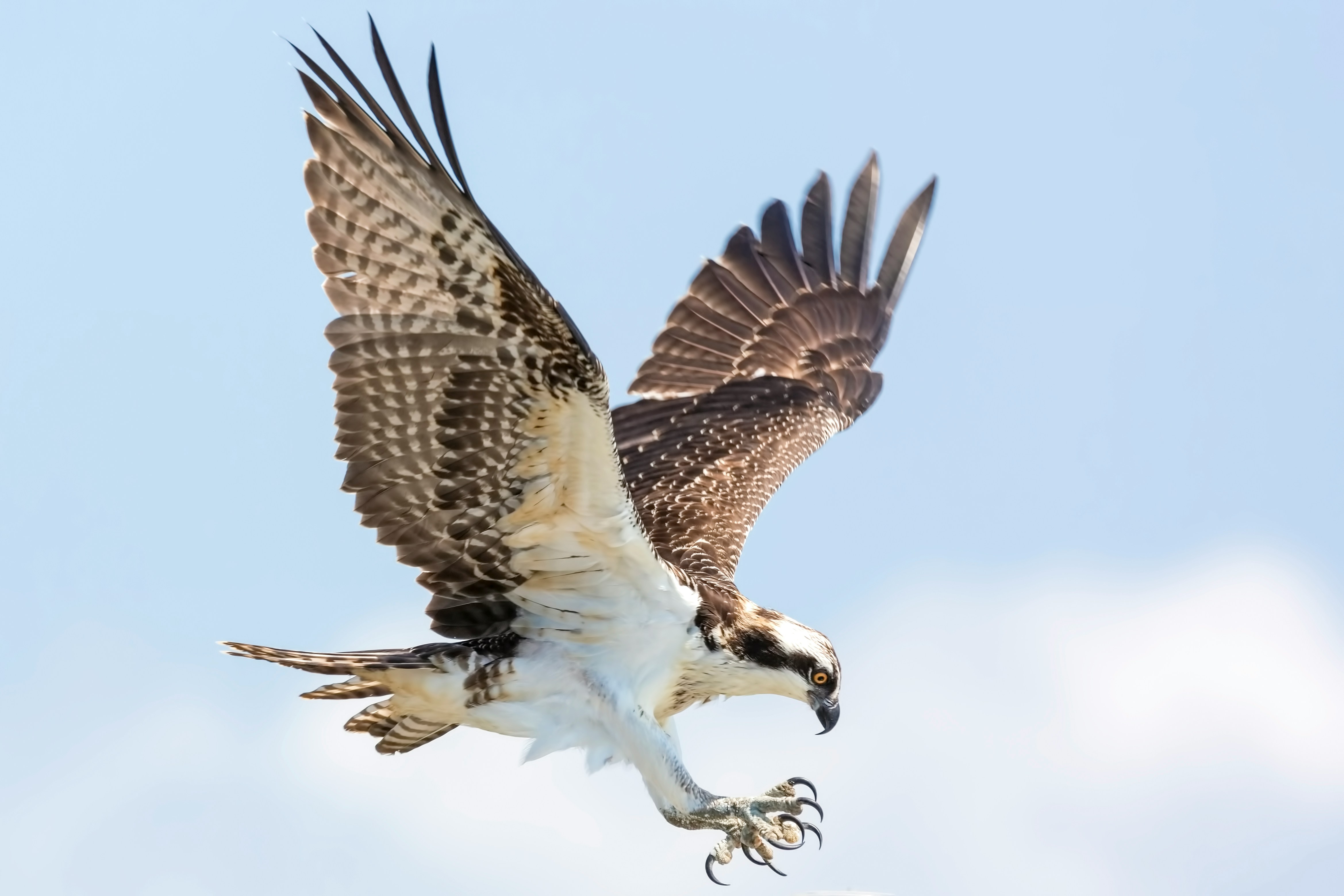
Next time you’re in the refuge—perhaps to celebrate World Migratory Bird Day on May 9, TODAY —keep an eye out for raptors, soaring bald eagles and peregrine falcons and the northern harrier, light gray or brown with a white rump patch and an owl-like facial disk, flying low over the marsh, its flapping wings formed in a V-shape above the horizontal.
Please consider joining our community of stewards committed to Make Every Day Earth Day. Please consider following our Instagram and Facebook pages.
This education column was originally published by The Daily News of Newburyport on May 8, 2029.

%20(1).png)