.svg)

Commentary
Using AI to Reduce Food Waste



This is one in a series of educational columns fostering environmental stewardship and leadership coordinated by ACES — The Alliance of Climate and Environmental Stewards.
With artificial intelligence, AI, becoming a frequent topic of discussion over the last few years, ACES wonders how its ever-growing popularity may positively and negatively affect our lives, climate, and environment. While there are ‘major’ negative effects already identified, for instance the demand for more and more new computer farms, the electric power they will require to operate, and their potential for offsetting future clean energy generation gains and increasing local water usage. There are also concerns about AI generated products missing the mark on accuracy and misleading its users, since the nature of the question asked may skew the quality of the answer and give misleading or exaggerated advice.
There are many complicated questions and issues to be considered. But since AI is apparently here to stay, we think society should explore what positive things might result from the cautious use of AI. We are already being told how it can reduce corporate expenses by reducing jobs, but what can it do to improve our lives, including for today’s topic, reducing food waste.
This note from the Harvard School of Public Health helps us size the problem “Wasted food has far-reaching effects, both nationally and globally. In the U.S., up to 40% of all food produced goes uneaten, and about 95% of discarded food ends up in landfills. It is the largest component of municipal solid waste at 21%.” https://nutritionsource.hsph.harvard.edu/sustainability/food-waste/
The World Wildlife Federation recently partnered with three other nonprofits and “conducted pilots using AI purchasing systems in two different grocery retail chains to reduce food waste and improve profits. The results were impressive: food waste was reduced by 14.8% per store on average." It seems that by improving inventory management, enhancing demand forecasting, and analyzing food waste patterns to optimize purchasing and preparation processes, food waste can be significantly reduced
So, maybe AI can help on the front end of waste generation by calculating the right amount of food to be purchased by families (packaging), school cafeterias (timing and amounts), and restaurants (historic demands). AI also can help provide menus and recipes to utilize what may already be on hand and find cost savings by sorting through in season bargain food items.
In addition to avoiding waste in the first place by buying just what is needed, we are faced with the problem of preventing residential and restaurant food waste from being mixed in with non-food waste. Food waste, not mixed with random other stuff and collected efficiently, can be composted. And compost is a valuable commodity once aggregated for convenient use on farms and in gardens. Composing food waste also produces less methane gas than landfills. Better for our climate.
But in the end, are the physical processes and facilities needed to do all this are the practical ways to segregate food waste from trash. At home, maybe it’s as simple as doing a ‘Black Earth’ compost pickup. But in restaurants and cafeterias, there are more complicated questions of space, workforce training, and facility design. So, in the end, it’s the family or the restaurant or the food store that need to figure out the best way to first reduce waste and second to segregate it for proper disposal. Can AI help develop the options to be considered? Likely the answer is yes.
These approaches to food waste and AI are not, using a baseball metaphor, ‘home runs’ but rather, bunts and singles. But that’s ok. AI will bring big changes to our lives and culture and it won’t do it in one big change but rather with dozens of little changes. We just have to think outside the box and accept that things will have to change in our habits and processes of life and business to gain the benefits. Where can you see these ideas being used effectively? Just drop us a note at info@aces-alliance.org.

Louis Armstrong was an Environmentalist
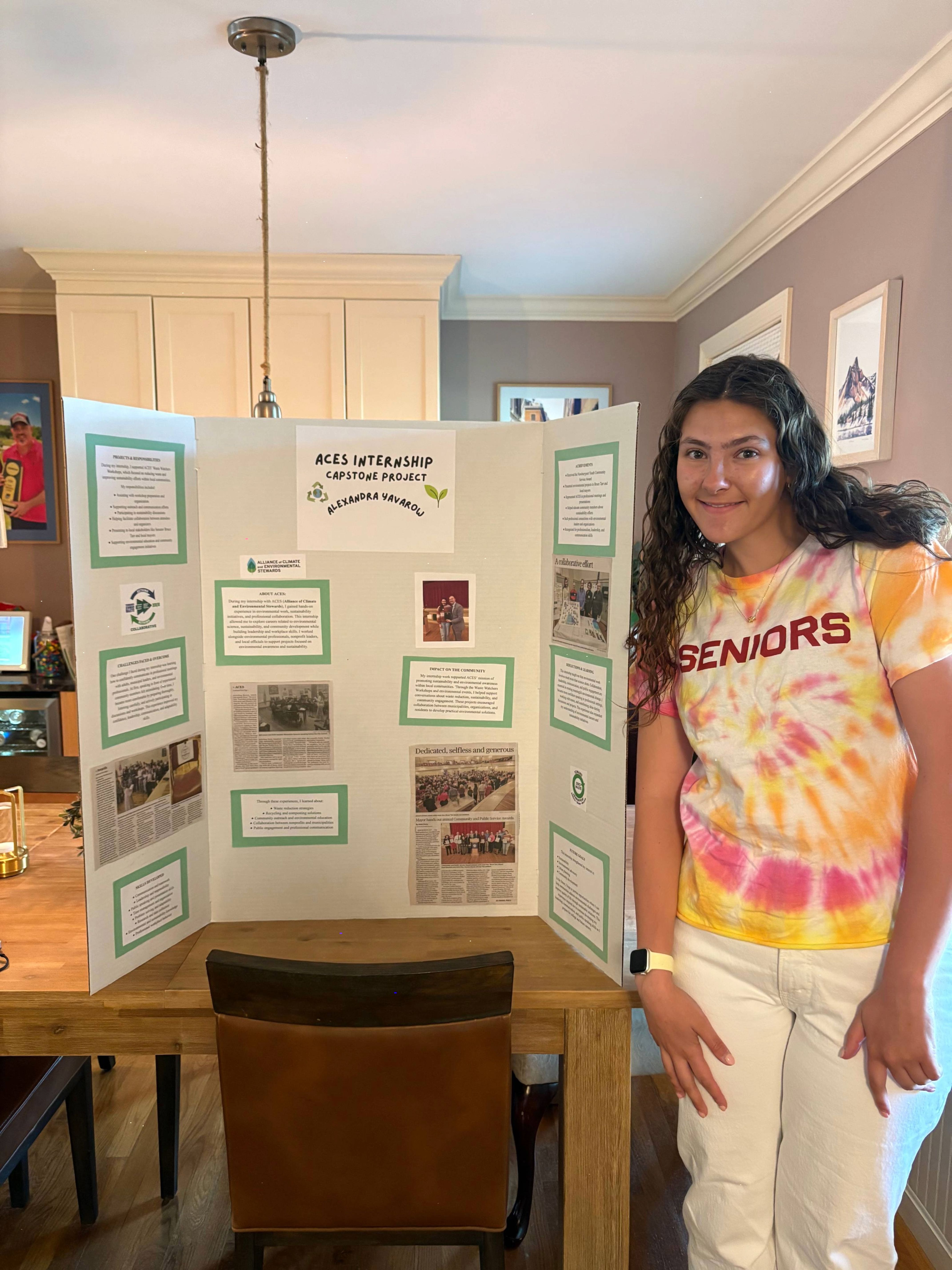
The Value of Learning from an Internship: