.svg)

Commentary
Chutes and Ladders


This is one in a series of educational columns fostering environmental stewardship and leadership coordinated by ACES — The Alliance of Climate and Environmental Stewards.
current administration, with Congress looking the other way, replaces science-based and long-standing environmental law with pro-fossil fuel policies. It feels like a giant virtual game of Chutes and Ladders. Years of scientifically grounded steps forward and now one year of decadal backsliding.
Election cycles this Fall may move the country back up the ladder of safeguarding the environment again or it may send us sliding further down the perilous chute of deregulation. Environmentalists groan as the federal government pulls back from climate leadership, but the game does not have to end here. Instead, state and local governments can pick up the dice, and innovate by building ladders of their own to advance the upward climb.
If Massachusetts and a few neighboring states join together, their collaborative regional efforts could be very effective. As the federal government backslides, governors, state legislatures, mayors, and town councils still hold powerful tools. They control many of the technological and regulatory hotspots on the game board where climate outcomes are often decided.
Recent history illustrates this dynamic. When the US abandoned the Paris Agreement, many states responded not with resignation but with resolve. Groups like the U.S. Climate Alliance, which is composed of governors committed to upholding the accord’s targets and is pledged to pursue emissions reductions independently. When California, the nation’s largest car market, expanded their clean air standards, their actions effectively influenced manufacturing decisions nationwide. Auto companies unwilling to build separate fleets for different states, often chose to meet California’s higher bar. This turned one state’s ladder into a platform for nationwide advances.
Many cities and towns have been responsive to these challenges. For instance, community leaders in the lower Merrimack Valley are currently teaming up to save money and reduce greenhouse gas production as they remove compostable organic waste (40% of waste by weight) from their waste streams. Mayors and select boards can also retrofit their public buildings and electrify school buses. Permitting boards can streamline processing of rooftop solar installations. Each tailored policy becomes a small ladder, incremental but cumulative.
Skeptics argue that decentralized action creates a patchwork of standards that complicates compliance and are inadequate. That concern is not unfounded. A messy game board can be confusing. But the alternative of waiting passively for new federal leadership risks continued backsliding.
Moreover, city-level experimentation can create new approaches and serve as testing grounds, as successful policies can often scale upward. And renewable energy standards that began in individual states can set the table for broader national conversations about the environment.
Clean energy doesn’t just generate electricity it creates jobs, attracts investment, and spurs technological innovation. States competing for economic growth increasingly view proactive climate policy not as a burden but as a strategic advantage. Wind and solar projects revitalize rural communities. The pursuit of climate solutions becomes both an environmental and economic ladder.
As we know, state and local action cannot entirely substitute for federal power. National standards, international diplomacy, and large-scale funding require federal coordination. But like ecosystems, the genius of American federalism lies in its redundancy. When one level of government falters, others can advance. The game board has many starting points.
In this game of *Chutes and Ladders*, victory depends not on avoiding every setback but on rising up after each downward slide and then climbing upward again when another ladder appears. The path to climate stability is uneven. Federal retreat feels like a steep slide down a chute, but states and cities have demonstrated that they are not merely pawns awaiting direction. They are active players, creating and climbing ladders square by square, ensuring that local progress continues even when national mis-direction falls short.
You can play this game with us. Please volunteer now to help ACES build and climb new ladders upwards toward sustainability.
ACES invites you to read up on ideas to reduce plastics in your life at myplasticfreelife.com/plasticfreeguide and to stay updated on environmental matters by subscribing to our monthly newsletter on ACES’ website www.aces- alliance.org. Please consider joining our community of stewards committed to Make Every Day Earth Day by following our Instagram (@acesalliancenbpt) and Facebook (@ACESAlliance) pages to stay informed.
This Educational Column was originally publish in The Daily News of Newburyport on Febuary 287 2026.
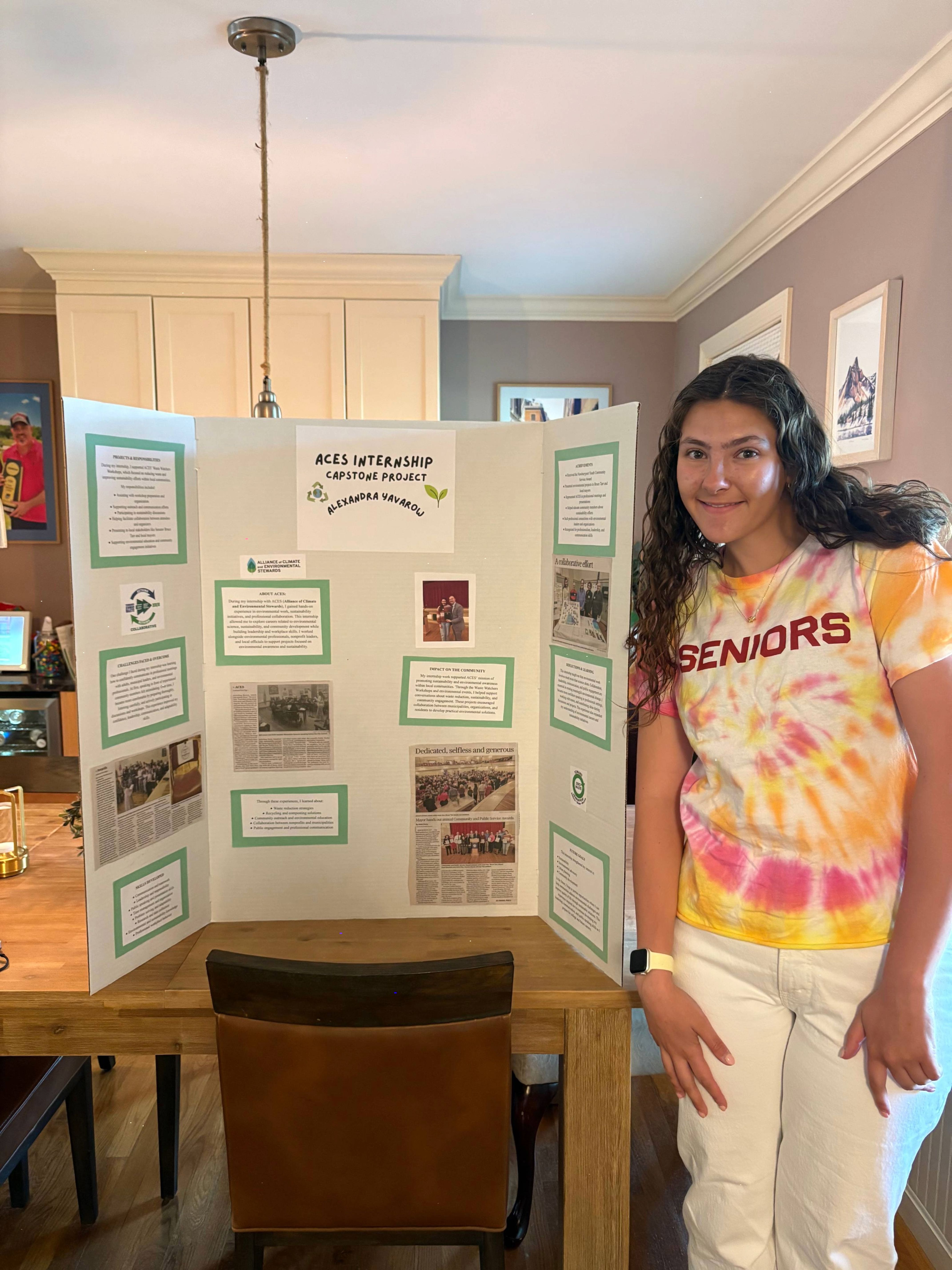
The Value of Learning from an Internship:
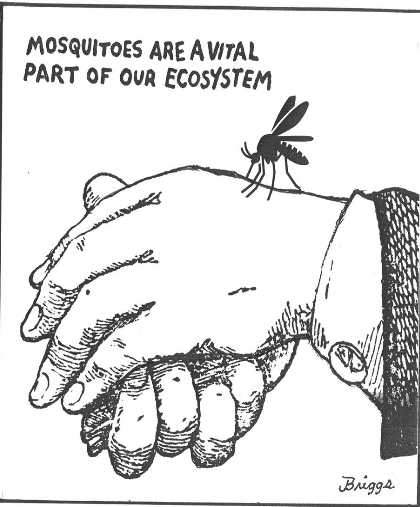
Looking at Mosquitoes Through the Lens of a Naturalist