.svg)

Commentary
So It’s Earth Day Again…



This is one in a seriesof educational columns fostering environmental stewardship and leadershipcoordinated by ACES — The Alliance of Climate and Environmental Stewards.
April 22, 2026 is Earth Day, the 56th anniversary of its inception in 1970 which had over a 20 million participants. This year, April 22, will see more than a billion people come together globally to celebrate Earth Day. It’s the world’s largest secular civic event, and somehow, it still flies under the radar in too many circles. There will be celebrations, events, discussions going on all in the name of Earth Day. We make posters, plant trees, but what really changes? Instead of pledges, Earth Day needs to be a rallying cry to everyone, from tree-huggers to gas guzzlers, to stop and really ask themselves, “What can I do better?”
How did Earth Day start? Back in 1970, there was very little pollution control. There was smog and air pollution, the Cuyahoga River caught fire, and there was the Santa Barbara oil spill. Pollution had become a bipartisan issue, Democrats and Republicans alike, including some corporations, jumped on the bandwagon. The issue united farmers, students, and many other unlikely teammates. Denis Hayes and Senator Gaylord Nelson mobilized 20 million Americans to come out, unite, and demand environmental reform, using “Teach-ins”. It captured national attention from all the big magazines like, Time, Forbes and Newsweek. It was the start of Americas environmental movement and led to the formation of the Environmental Protection Agency (EPA), and the passage of the Clean Air Act, and the Endangered Species Act, all of which had a transformational effect on public health, industrial standards, and conservation efforts in the US. Of course, it was a little more complicated than that, many influential people rose up, some wrote extremely influential science-based books, for instance Rachel Carson’s, Silent Springs, but it was the ground swell of millions of people protesting uncontrolled pollution that triggered the change.
This year’s Earth Day theme is “Our Power, Our Planet.” It focuses on accelerating the transition to renewable energy, with a goal of tripling clean electricity globally by 2030, while emphasizing community-scale solutions, data-driven accountability, and active participation. Although these sound like overwhelming goals, it should be noted that Massachusetts (we the people) made some real climate progress, even in today’s difficult national political situation.
Massachusetts continues to work toward green power with the completion of the high-voltage transmission line that brings hydroelectric power from Canada to the Commonwealth, while also working to ensure energy equity to lower income and minority communities. Vineyard Wind, the offshore wind project, began sending power to the grid in 2025 and the final construction should be complete in March. More than 50% of the electricity consumed in Massachusetts now comes from carbon-free sources, and will jump to 75% by the end of 2026 due to the wind, solar, and green electricity projects being fully on-board.
The other major success is that Massachusetts is ahead of its goals for heat pump installations, providing efficient electric heating and cooling. Boston is also piloting window-based heat pumps for apartments and affordable housing buildings, which if successful, will lower the cost of their energy usage for heating and cooling. These modular plug-in units will replace outdated and much less efficient electric-resistance systems, with an anticipated 50% savings in energy usage.
These are just a few examples of enacting Every Day is Earth Day, by making positive headway toward clean energy, decreased pollution, and decreased waste and resiliency. As citizens, we should all look at our lives and evaluate what we can do every day to help clean up the earth, through voting, composting, and eliminating single use plastics in your life…it all moves the change in the right direction. Happy Earth Day!
“All those years ago, in 1970, we were ridiculously confident that we were going to win. We launched a genuine environmental revolution. We proved that an engaged public can be an unstoppable force. It can be again in 2026.”— Denis Hayes, Organizer of the First Earth Day and Board Chair Emeritus, EARTHDAY.ORG.
We invite you to stay updated on environmental matters by subscribing to our monthly newsletter on ACES’ website. Please consider joining our community of stewards committed to Make Every Day Earth Day and subscribe to our Instagram and Facebook.
This educational column was originally published by The Daily News of Newburyport on April 17, 2026.

Louis Armstrong was an Environmentalist
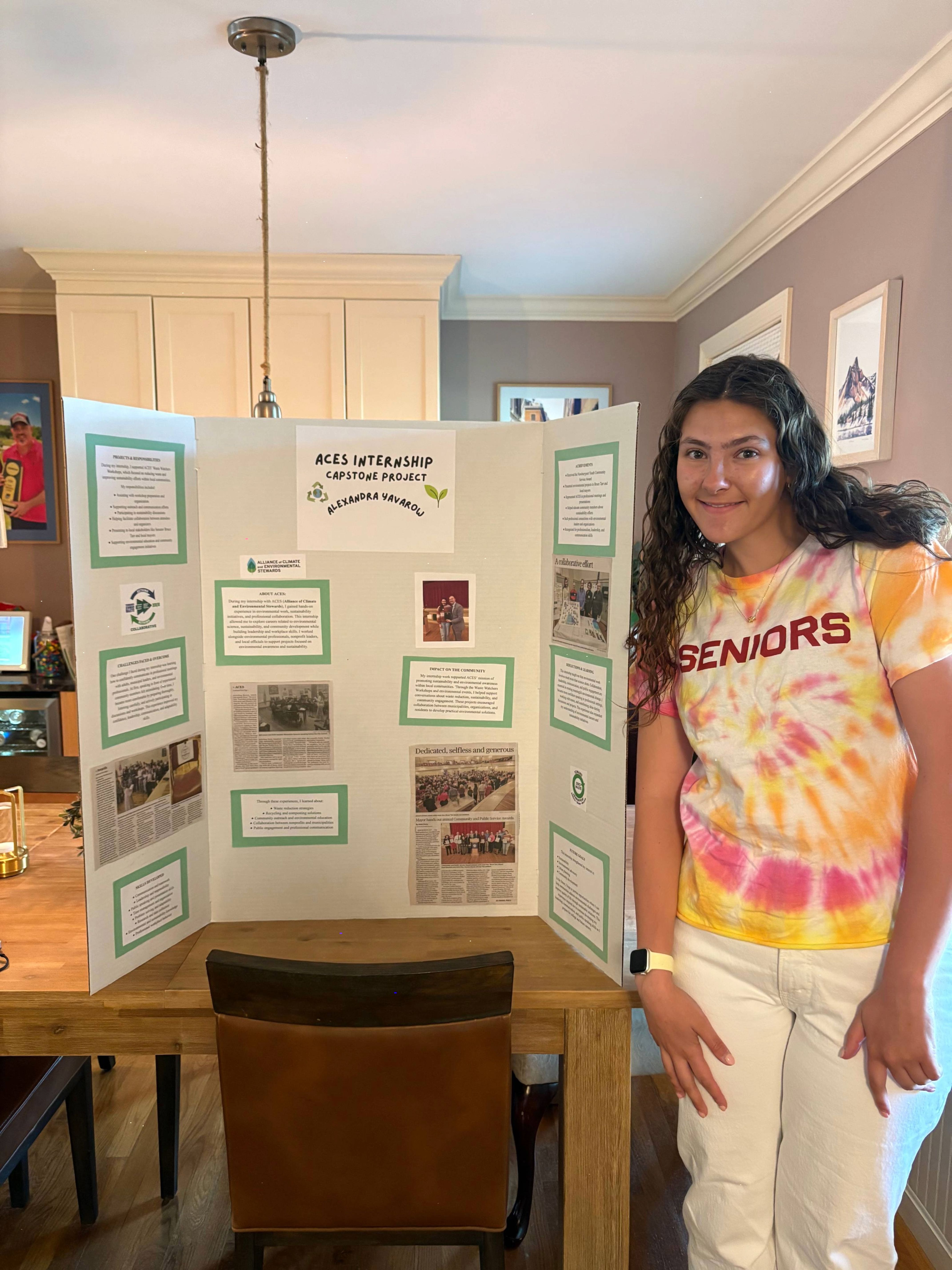
The Value of Learning from an Internship: