.svg)

Commentary
Increasing Access to Clothing Through a Community Swap

This is one in a series of educational columns fostering environmental stewardship and leadership coordinated by ACES — The Alliance of Climate and Environmental Stewards.
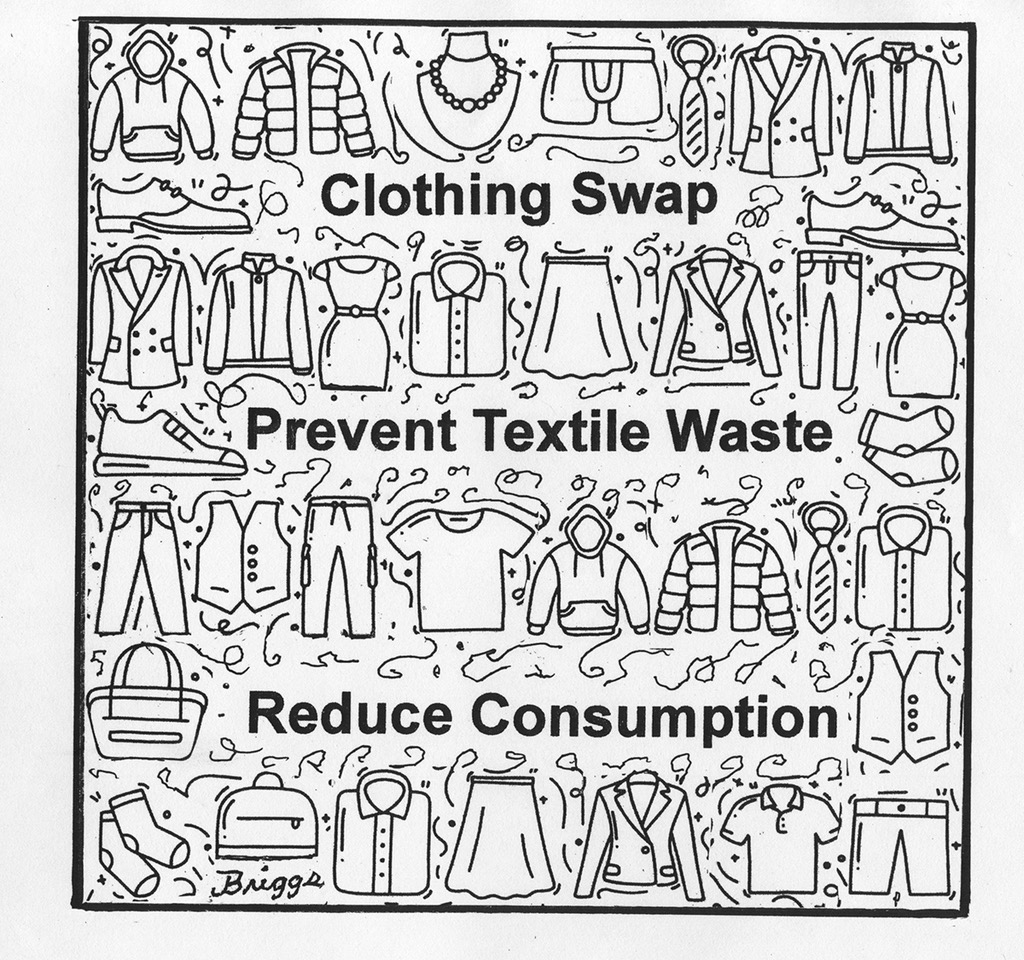
Access to clothing is a basic human necessity. However, each year, billions of clothes end up thrown away, which is problematic due to the manufacturing costs of new garments, which include massive amounts of water, energy, and natural materials. A large part of this issue comes directly from synthetic textiles such as polyester and nylon, materials frequently used in cheaper clothing. This becomes significant when these clothes are rapidly bought and thrown out, shedding plastic fibers directly into waterways and ecosystems. To make things worse, brands that push out these low-quality clothes do so with the intent of profit rather than providing garments to their customer base. Making change begins with finding ways to share and reuse clothing on the local level.
Furthermore, the waste of clothing creates severe environmental impacts such as the accumulation of fabrics in the ocean. Over 35% of marine microplastics originate directly from synthetic textiles, which makes them one of the largest sources of industrial plastic pollution in the world’s oceans. The amount of microfibers released into the ocean every year is equivalent to over 3 billion polyester shirts. Additionally, very few of these cheap textiles are ever recycled (15%) due to cheap production quality.
In the past years, the cost of clothing has continuously increased to a substantial amount. Seasonal clothes and shoes must be affordable, especially in months with more extreme temperatures. Necessary clothing should not be a luxury, nor should it put financial strain on families. Unfortunately, items such as coats, gloves, and hats are often priced out of range. Due to this reality, society has shifted towards overconsumption, and people in need are made to have limited wardrobes. While many people have more clothes and accessories than they need, others do not.
In order to address these issues, the Pentucket Neighbors United Club has planned a free community clothing swap. This event will take place on Saturday, October 17, 2026 from 12:00 PM to 3:00 PM in the Pentucket High School Gym, located at 24 Main Street in West Newbury. The swap will be free and open to people from all cities and towns. Additionally, there is access to the school via fare-free MEVA bus routes, which stop directly outside the high school.
The event will be set up like a regular store so that people of all ages can browse normally and freely. The event will also have simple rules. People can drop off used adult and children's clothing, shoes, hats, scarves, and accessories. All items should be freshly washed and in good condition (no rips or stains). Anyone is welcome to come by to shop and pick out clothes that they may need, whether or not they have anything to swap or not. At the end of the event, all leftover clothing will be donated to Ruth's House in Haverhill to further support local families.
Our main goals that we aim to accomplish with the event include reducing textile/clothing waste, building youth leadership, and creating a more tight knit community. Not only will this event provide people with quick access to garments, but it will also allow high school students to gain humanitarian experience. We are working to normalize secondhand clothing for everybody. And, we hope the event can increase local awareness on the importance of conscious consumerism. Pooling our clothing as a community helps people save money and keep great clothes in circulation, ultimately reducing our impact on the planet. Having a society that cares about those in need fosters a culture of mutual support and shared responsibility.
Henry Smith and Lukas Piracini are Co-Founders of Neighbors United. For questions or more details, contact 978-204-2537, or visit our Instagram: pentucket_neighbors_united
We invite you to stay updated on environmental matters by subscribing to our monthly newsletter on ACES’ website. Please consider joining our community of stewards committed to Make Every Day Earth Day and subscribe to our Instagram and Facebook.
This educational column was originally published by The Daily News of Newburyport on October 9, 2026.