.svg)

Commentary
Why Environmental Justice?


This is one in a series of educational columns fostering environmental stewardship and leadership coordinated by ACES — The Alliance of Climate and Environmental Stewards.
I currently sit here, in my last semester at the University of Colorado, anticipating graduating with a degree in environmental studies and ready to embark on a career in Environmental Justice (EJ). New to Colorado, I was raised in Newburyport, where my relationship with the outdoors was formed. In a tiny house on Franklin Street, just steps away from the Merrimack River, the seeds were being planted which formed my love for this beautiful place that I call home.
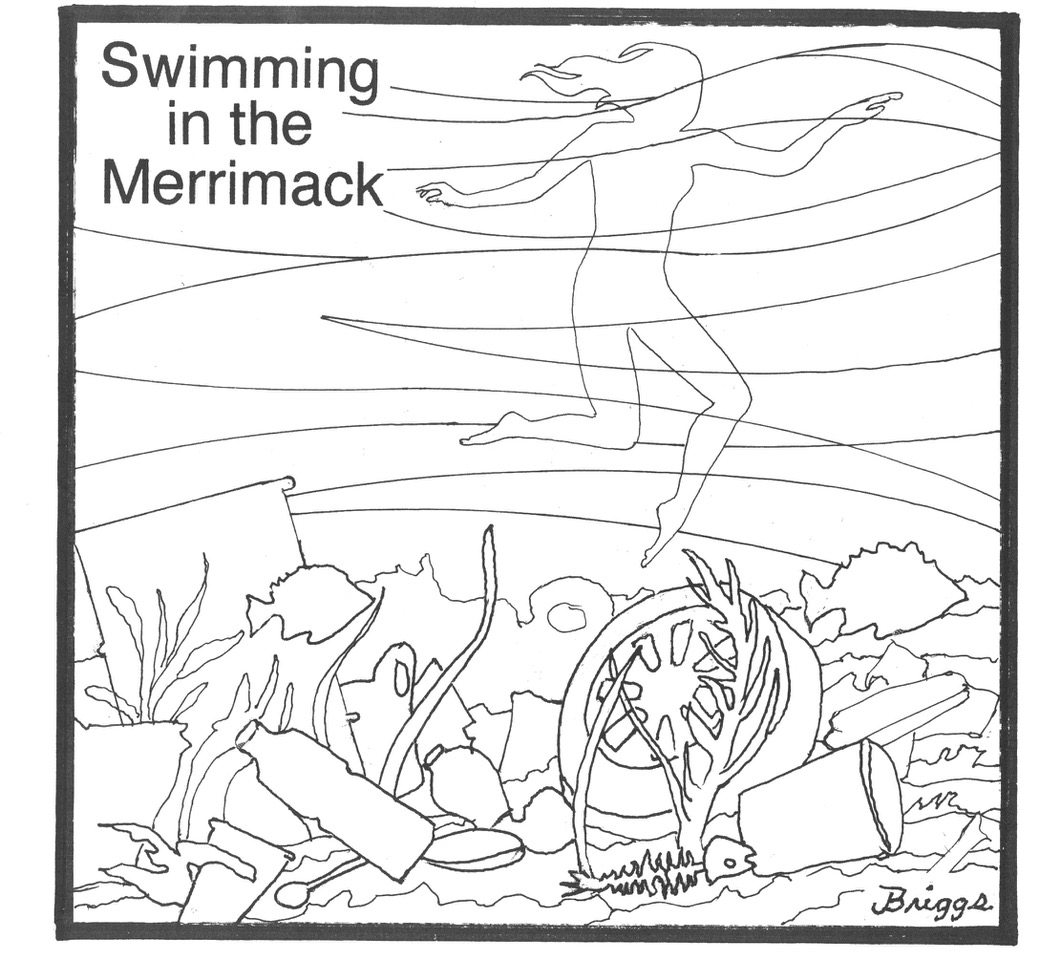
I was incredibly fortunate to spend a semester in Lisbon, Portugal, where I studied under some incredible professors. My thesis advisor, Enrica Boager, had an extensive background with a sociological phenomenon known as the “sense of place”. Sense of place is a concept that your favorite park will essentially look the same when you see it for the first time at five years old as it will when you go back on your ninetieth birthday; a feeling of belonging and familiarity is evoked. When thinking about our planet, especially those of us raised along the Merrimack River, I believe we have one of the most unique ties to this sense of place. I remember swimming in the mighty Merrimack, anchoring on sand bars, spending all day on the beach, and feeling a real sense of home with the outdoors. But as time passed, a sense of the river being “polluted” came to my mind - time and time again. Now, when I return to the east coast, I feel as though my sense of place with the Merrimack River has been tarnished, especially this summer following the Haverhill sewer line break; change was omnipresent.
When considering an experience like my own - swimming safely in the Merrimack River - and comparing it to many historic EJ events, scaling up becomes horrific. Consider Indigenous Peoples who face massive pipelines running through their sacred land, or residents of Flint, Michigan with lethal bacteria levels in their water, which unbeknownst to them could later lead to cancer. I just feel like someone has to stand up for them.
The definition for Environmental Justice that I like best is “The right of everyone to a clean, healthy, and safe environment in which we live, work, learn, play, and pray”. Law and policy are among the most powerful equalizers available to resolve social inequities and injustices. I believe so strongly that Native Tribes deserve to have their vast open spaces protected, and that people should not have to worry about dying from cancer because they live in a place like Flint, Michigan.
In the second semester of my Junior year, I had the opportunity of interning for a small environmental law firm in Washington D.C. I saw the in’s and out’s of a fast paced and passionate small law firm. I often hear more of my peers considering law school, although it is unlikely that we will all go - as passion in your 20’s can sometimes be fleeting. But I think the point to highlight here is the fire that has been lit within my generation, the feeling that we have no other choice but to do something personally. It is professors like Enrica Boager, and local leaders like Molly Ettenborough, Newburyport’s Recycling and Energy Manager, that inspired me to embrace this feeling and take action.
This past summer, Molly Ettenborough graciously took me under her wing as an intern. Interning for Molly was not only a crash course in the logistics of working for a City, but it also furthered my sense of pride being from Newburyport. Between our recycling center filled with volunteers, solar panels on the roof of the Nock middle school, and an openness and willingness to change, Newburyport is an environmental leader. It is because of great leaders like Molly and a community which appreciates and protects the natural beauty they are surrounded by, that this great city of environmental stewards has flourished. Even though events like the Haverhill sewer line break this summer are disappointing, it is reassuring to know that Newburyport is tirelessly fostering EJ goals so that generations to come can live, work, learn, play, and pray in a clean, healthy, and safe environment.
Adella Daigle is a Newburyport resident in her senior year at the University of Colorado, Boulder studying for a degree in environmental studies. She is a graduate of Newburyport High School where she served as President of the Environmental Club and led various student-driven sustainability initiatives.
We invite you to stay updated on environmental matters by subscribing to our monthly newsletter on ACES’ website. Please consider joining our community of stewards committed to Make Every Day Earth Day and subscribe to our Instagram and Facebook.
This educational column was originally published by The Daily News of Newburyport on September 18, 2026.
%20(1).png)