.svg)

Commentary
Rubbish to Runway


This is one in a series of educational columns fostering environmental stewardship and leadership coordinated by ACES — The Alliance of Climate and Environmental Stewards
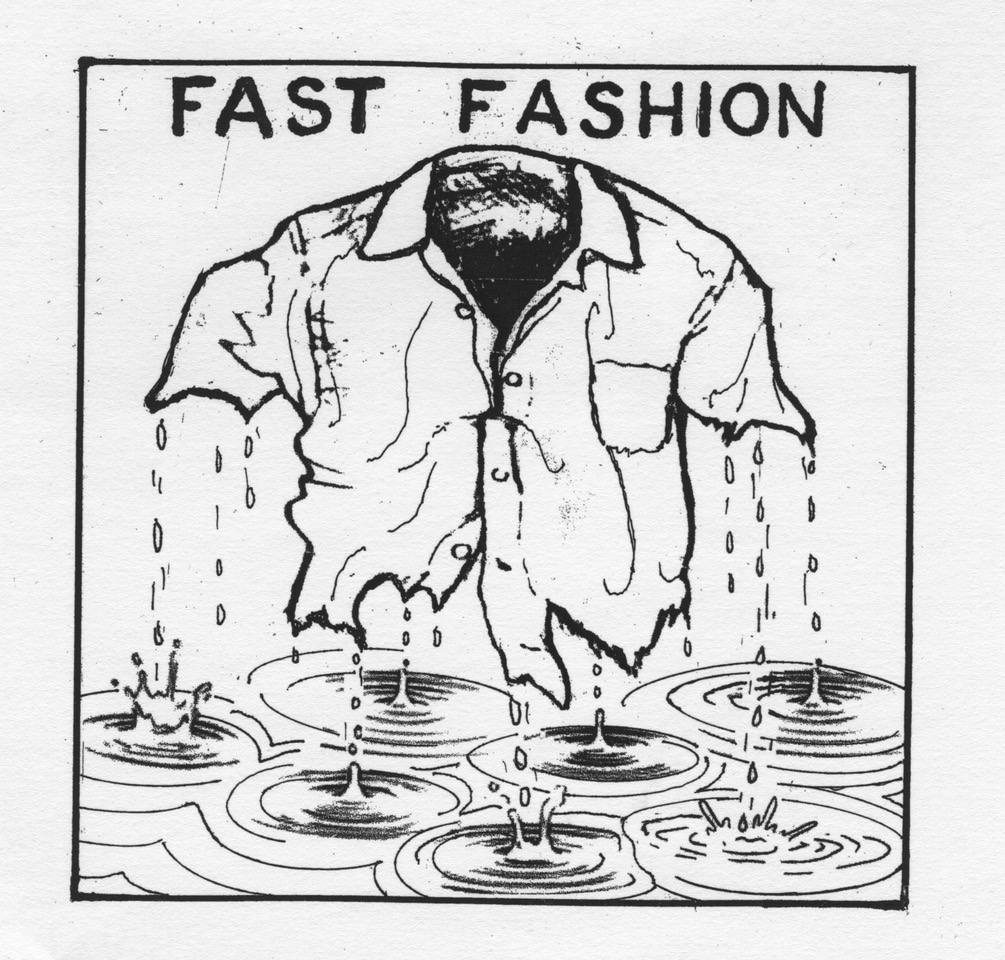
Fast fashion produces 92 million tons of textile waste annually. It accounts for roughly 10% of annual carbon emissions. For those who are unfamiliar with the term (and count yourself lucky if this is the case), fast fashion is the rapid design and manufacturing of clothing in order to maximize output.
Traditionally, clothing design has not been a fast process. New styles came and went, but at a pace that manufacturers could keep up with. However, the introduction of fast fashion has completely turned the cycle upside down. New styles rotate on a weekly basis, and each company fights for space in the rapidly changing industry by offering hundreds, if not thousands, of different garments for customers to pick from at any given time.
But as the old adage says, of the three measures of a product (fast, cheap, and well-made) you can only ever have two. Fast fashion chooses to capitalize on the first two and entirely neglects the third. After all, no one is going to care that their shirt–which arrived on Monday–is falling apart by Friday if there is a new package waiting on their doorstep. The most worrisome part is how well this business model works.
Each major world economy seems to have adopted its own brand to occupy the growing industry: Spain has Zara, China has Shein, Sweden has H&M, Japan has UNIQLO, Ireland has Primark. And don’t think that the U.S. is exempt from this list. Instead of producing the clothes, we buy them. The U.S. is the number-one consumer of clothing in the world by volume, with each American buying an average of 53 new items each year.
And while the production of these textiles is terrible for the environment in and of itself, ACES’ focus this week is on what happens to that shirt that is falling apart by Friday. Most traditional clothing is made with materials that are harvested from natural sources (e.g., cotton, linen, wool, leather, silk) and therefore can be returned to the earth easily when it has been thoroughly used. When clothes are made from high-quality materials, this should be quite a while.
On the other hand, to maximise efficiency and keep prices low, fast fashion uses synthetic materials (e.g., polyester, nylon, acrylic), which harm the earth in the same way that plastic does when it is put in a landfill or winds up in the ocean.
Massachusetts does not allow textiles to be thrown away, so many opt to donate what they no longer want to thrift stores. Thrifting, a growing market especially among younger generations, is a great way to mix up your wardrobe while causing minimal environmental impact. But the thrift cycle relies on goods of a high enough quality that they can transition between multiple owners and retain their use. Since Americans consume copious amounts of clothing each year–and throwing it away is illigal, despite much of it not lasting–this raises the question: where does all of this fabric end up?
There is no definitive answer, although it is assumed that much of it ends up harming the environment in one way or another. Some is shipped overseas and then dumped because it is too decrepit to be resold, and some is simply burned.
In Groveland, there appears to be a solution. Veasey Park is hosting its annual “Rubbish to Runway” fashion show at the end of the month, and expectations are high for this year's designs. On the evenings of June 26th and 27th, models will strut down the runway wearing novel outfits made from reclaimed and recycled materials. Previous outfits include ball gowns created from produce bags and tracksuits made from camping tents.
Proceeds from ticket sales go toward “offering free and affordable community events and developing innovative arts programs that cater to diverse age groups and skill levels at Veasey Memorial Park.” Additionally, this event brings community members together and raises awareness for sustainable fashion choices.
With creative community efforts like this, we have the opportunity to combat the harmful effects of fast fashion.
If you are interested in learning more about Rubbish to Runway, visit veaseypark.org. Tickets are almost sold out, so make sure to get them while you still can!
We invite you to stay updated on environmental matters by subscribing to our monthly newsletter on ACES’ website. Please consider joining our community of stewards committed to Make Every Day Earth Day and follow our Instagram and Facebook.
This educational column was originally published by The Daily News of Newburyport on June 12, 2026.
%20(1).png)